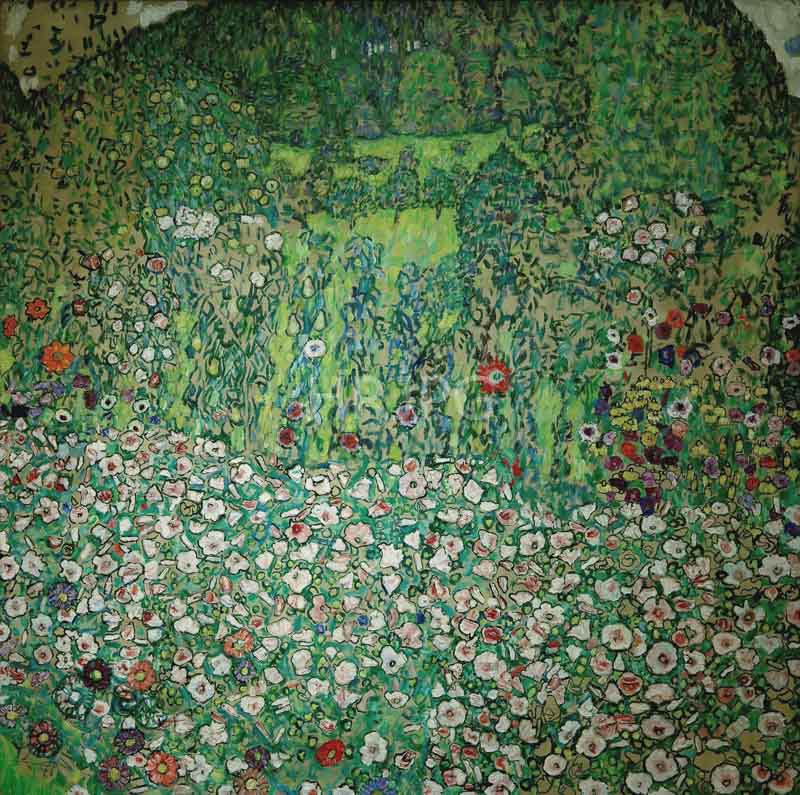
Artist: Gustav Klimt, Year: 1913. The symbolic and vibrant oil painting "The Virgin" (also known as Die Jungfrau) is one of Gustav Klimt’s last major masterpieces, produced during his late mature period. During these years, Klimt moved away from the rigid gold surfaces of his earlier work to embrace a more "painterly" and color-focused aesthetic, influenced by the Fauves and the early Expressionists. "The Virgin" is a profound and complex allegory of the "female lifecycle," exploring themes of evolution, desire, and the eternal "cycle of human existence" through a swirling, dreamlike mosaic of intertwined figures.
Technically, the composition is characterized by its "dynamic circularity" and its extraordinary use of vibrant color. The central figure of the virgin is shown sleeping peacefully, while a group of "intertwined female figures"—representing different stages of life and emotional experience—swirls around her in a dynamic, cloud-like formation. Klimt utilizes a square format to enhance the sense of "total harmony" and "infinite cycle." The palette is a riot of pinks, purples, oranges, and deep blues, applied with a rhythmic, "shimmering" technique that creates a sense of "physical vibration." Each figure within the mosaic represents a different stage of a woman's emotional and physical development, suggesting that individual identity is part of a larger, cosmic whole. The "flattened decorative surface" is filled with intricate floral and geometric motifs, which unify the figures into a single "tapestry of life." Klimt’s mastery of "anatomical simplification" allows the bodies to merge and flow into one another, suggesting a loss of individual identity in the face of universal forces. The lack of a traditional background pushes the figures to the front of the picture plane, creating an "immersive optical experience" that captures the dreamlike nature of the subject.
Historically, 1913 was a year of profound change in Vienna, as the old order began to collapse on the eve of World War I. "The Virgin" reflects the intellectual climate of "Fin-de-Siècle" Vienna, which was deeply influenced by the burgeoning field of psychoanalysis and the philosophical writings of Schopenhauer. The painting can be seen as a secular version of a religious altarpiece, reimagined through the lens of modern femininity and the "mysteries of the psyche." It captures the spirit of a city that was obsessed with the "cycle of birth and decay."
Art historians have consistently praised "The Virgin" for its "extraordinary imaginative power." Critics such as Frank Whitford have noted the "swirling energy" of the work, describing it as a "masterpiece of modern Symbolism." The painting is praised for its "innovative synthesis" of decorative design and emotional depth. Today, it remains a centerpiece of the National Gallery in Prague, standing as a testament to Klimt's unrivaled ability to transform a complex philosophical allegory into a shimmering, eternal mosaic of human life and nature’s mystery.