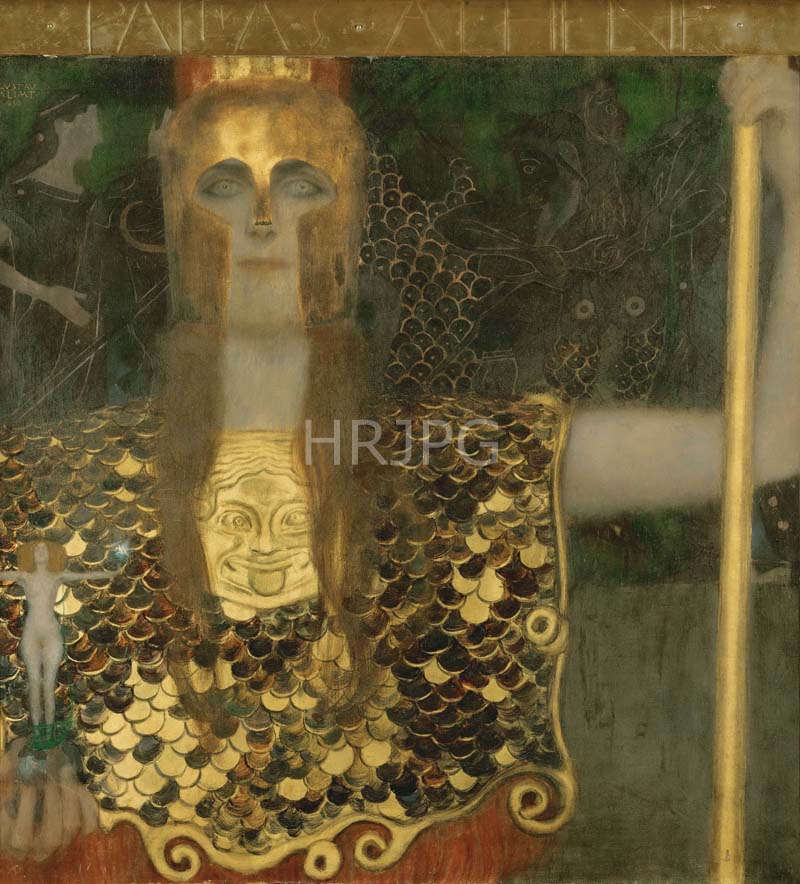
Artist: Gustav Klimt, Year: c. 1907-1908. The striking oil painting "Pale Face" (often identified as "Frauenkopf" or "Head of a Woman") was created during the pinnacle of Gustav Klimt’s "Golden Phase." This work is a profound example of his "psychological portraiture," where the artist moves away from full-length societal allegories to focus on the intense, internal life of a single subject. During these years, Klimt was deeply influenced by the burgeoning field of psychoanalysis in Vienna, and this painting serves as a visual meditation on "mystery and vulnerability," reflecting the era's preoccupation with the depths of the human soul.
Technically, the work is defined by its "dramatic contrast" and its mix of realistic modeling and expressive brushwork. Klimt utilizes a "pale, luminous face" set against a dark, atmospheric background, creating a strong focal point that captures the viewer's attention immediately. The subject’s "intense gaze" is the psychological heart of the composition, rendered with a level of detail that conveys a sense of intellectual and emotional weight. The hair and clothing are treated with more "gestural strokes," prefiguring his later move toward a more painterly style. A key technical detail is the subtle use of color within the "pale" tones—Klimt utilizes varied whites, creams, and faint blues to suggest the translucency of skin and the play of cool light. This approach prioritize "mood" over topographic detail, using the dark void of the background to push the subject’s internal state to the forefront. The composition is intimate and vertical, forcing a direct confrontation between the subject and the viewer. This technique highlights his mastery in seeing the "sacred aura" within a simple head study, transforming a person into a shimmering icon of modern consciousness.
Historically, 1907 and 1908 were years of great creative tension and output for Klimt, culminating in the "Kunstschau" exhibition. This period saw the birth of the "Modern Woman" archetype in Vienna—a figure who was self-aware and often melancholic. The work reflects the "Fin-de-Siècle" belief that the face was a mirror of the subconscious, a theme popular in the literature of Arthur Schnitzler and the art of the Secession. It captures the spirit of a city that was obsessed with the "mysteries of the psyche."
Art historians have consistently praised "Pale Face" for its "extraordinary atmospheric intensity" and its "psychological gravity." Critics have noted that Klimt’s early mature portraits possess a "quiet monumentality" that anticipates the existential weight of 20th-century art. The painting is praised for its "unvarnished sincerity," proving that Klimt’s brilliance was rooted in a deep understanding of human sensitivity. Today, it remains a vital document for understanding the anatomical and psychological foundations of his mature style, standing as a testament to his unrivaled ability to capture the complex, intimate, and sacred landscape of the human spirit through a single, focused gaze.