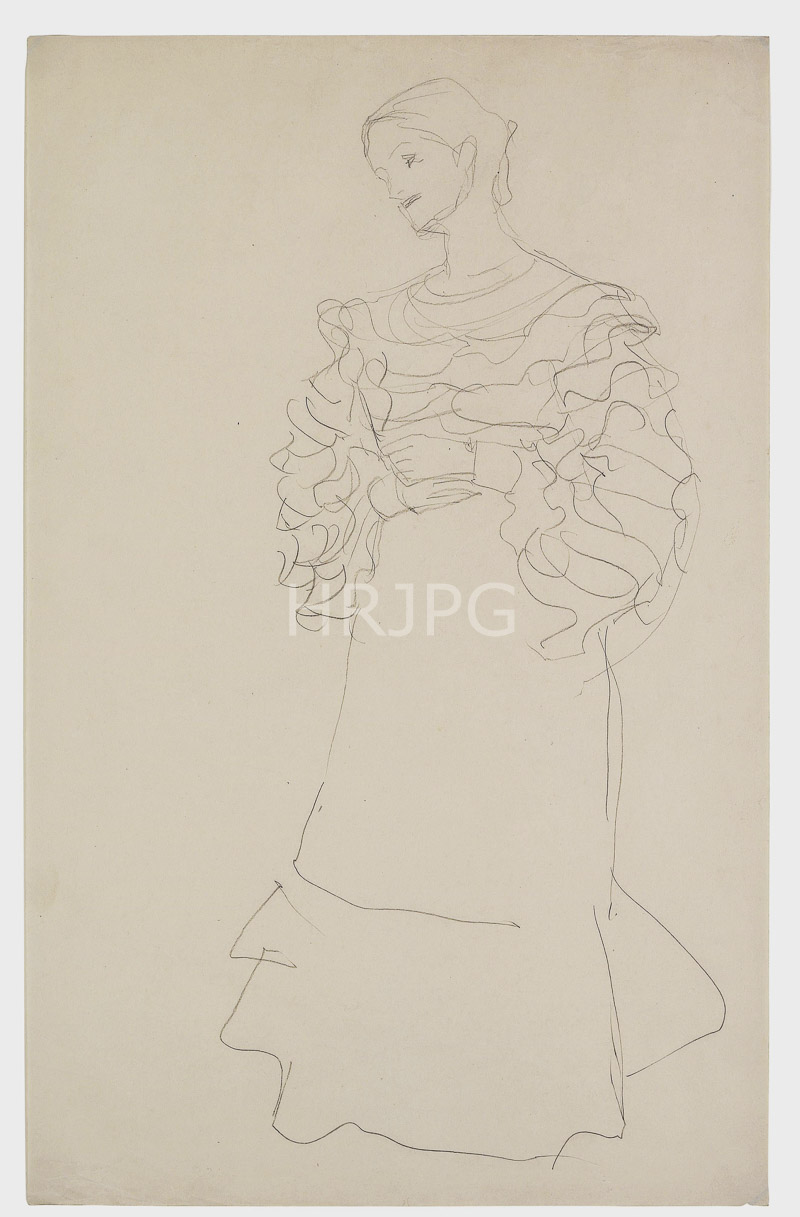
This refined and monumental pencil study, "Portrait of Magda Mautner Markhof Study," was executed by Gustav Klimt around 1904. It belongs to the dawn of his "Golden Phase," a time when he was meticulously refining the synthesis of human character and decorative grandeur. Magda Mautner von Markhof was a member of one of Vienna’s most influential industrialist families and a significant patron of the Wiener Werkstätte. This drawing is not merely a preparatory sketch but a profound graphic investigation into social status, feminine elegance, and the architectural power of modern fashion, reflecting the peak aesthetic of the Vienna Secession.
Technically, the work is characterized by its "voluminous lines" and its focus on the architectural structure of the clothing. Klimt utilizes a continuous, rhythmic pencil line to define the massive proportions of Magda's gown, turning the fabric into a structural element that anchors the composition. The "rhythmic outlines" of the dress create a visual vibration, suggesting a wealth of detail and texture without the need for traditional shading. The subject’s posture is stately and confident, her head tilted slightly to convey an aura of noble dignity. Klimt emphasizes the linear elegance of the neck and shoulders, contrasting the soft realism of the face with the bold, almost abstract geometry of the garments. The use of negative space around the figure is strategic, emphasizing the monumental silhouette and making the sitter appear as a modern, secular icon. This "sophisticated graphic line art" illustrates Klimt's mastery in conveying the "weight" of social standing through the sheer fluidity of the lead.
Historically, the Mautner Markhof family were central to the cultural life of "Fin-de-Siècle" Vienna, representing the progressive elite who championed the radical designs of Josef Hoffmann and the Secession. This study was part of the planning for a commissioned oil portrait, a project that required dozens of such drawings to achieve the perfect balance between the individual and the ornament. The work reflects the intellectual climate of the era, where the surface—the clothing, the décor—was seen as a direct reflection of the subject's "inner psyche" and cultural identity. It captures a moment when the decorative arts were elevated to the status of high philosophy.
Art historians have consistently praised these mid-period studies for their "technical purity." Critics like Jane Kallir have noted that Klimt’s drawings from the 1904 era show his ability to "sculpt with a line," creating a sense of three-dimensional presence through purely two-dimensional means. The study is praised for its "aristocratic calm," proving that Klimt could capture the essence of a social class through the simplest tools. Today, it is regarded as a vital document for understanding the anatomical and decorative foundations of his most famous portraits. It stands as a testament to his unrivaled ability to transform a societal commission into a shimmering, eternal investigation of human presence and modern style.