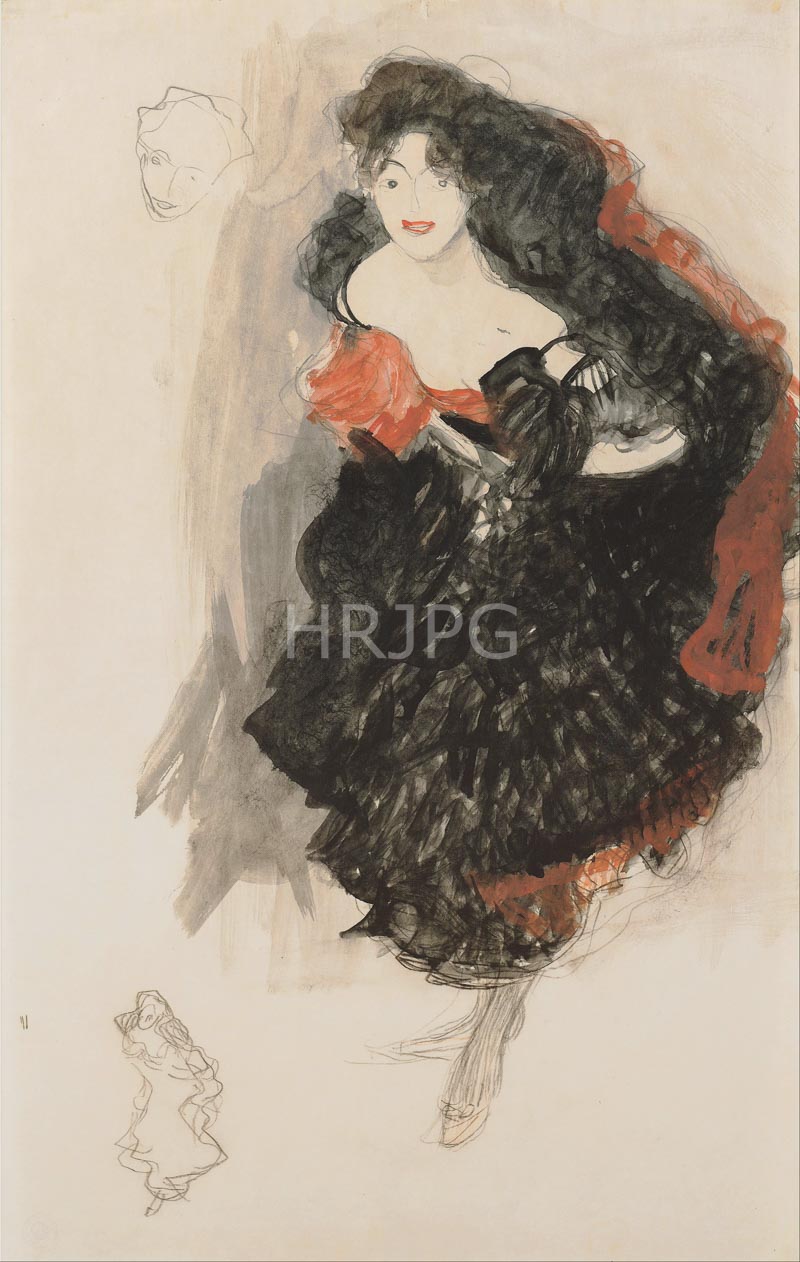
This dramatic charcoal and graphite drawing, "Study for Judith II," was executed by Gustav Klimt around 1908. It serves as a crucial preparatory work for his finished oil painting "Judith II" (also frequently identified as "Salome"). Produced during the peak of his "Golden Phase," this study represents a significant moment in Klimt's development of the "femme fatale" archetype—a recurring theme in his mature work that explored the dangerous and seductive power of women. The model for this work is believed to be Herma, one of Klimt’s regular models known for her striking features and expressive presence.
Technically, the work is defined by its "dramatic verticality" and its aggressive use of charcoal to suggest mood and form. Klimt utilizes bold, dark lines to define the woman's posture, showing her with a tilted head and a sense of dynamic, almost predatory movement. The "black dress" is suggested through expressive shading, creating a stark contrast with the pale skin of the figure. Unlike the earlier, more passive "Judith I" from 1901, this study shows a more agitated and monumental version of the biblical heroine. The composition is focused entirely on the upper half of the figure, emphasizing the psychological intensity of her expression and the tension in her hands. Klimt uses the charcoal to create a range of textures, from the sharp, clear lines of the facial features to the soft, smudged shadows of the garments. This approach highlights the artist's ability to convey a sense of "theatrical drama" through purely graphic means, using the line to suggest a world of internal conflict and desire.
Historically, the "Judith II" project reflects the intellectual climate of "Fin-de-Siècle" Vienna, a culture deeply preoccupied with the destructive potential of sexuality and the mysteries of the psyche. Klimt’s subversion of biblical and historical figures was a hallmark of the Secessionist movement, which sought to reinterpret traditional themes through a modern, subjective lens. This period saw Klimt influenced by the works of Jan Toorop and the broader Symbolist movement, leading him to create works that were as much about psychological states as they were about historical narratives.
Art criticism has long identified "Judith II" as one of the most provocative images in modern art. Critics such as Frank Whitford have noted the "nervous energy" of the work, describing it as a "portrait of modern anxiety." The study is praised for its "expressive honesty," proving that Klimt could achieve a sense of monumental power even without the addition of gold leaf or complex ornamentation. Modern scholars often point to this work as a masterpiece of Symbolist draftsmanship, noting its profound influence on the later developments of Expressionism. Today, it remains a vital document for understanding the anatomical and psychological foundations of one of the most famous and controversial paintings of the early 20th century.