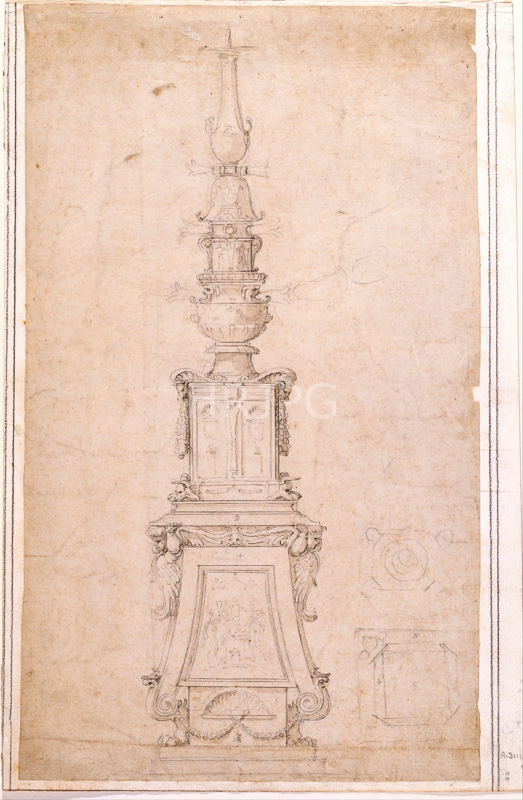
This refined ink drawing is a masterful design for a candelabrum, likely intended for an ecclesiastical or royal setting, such as the Medici Chapel or a papal residence. Michelangelo showcases his extraordinary decorative versatility, proving that his monumental sense of volume and grace could be applied to functional, small-scale objects. The candelabrum features a sophisticated arrangement of classical motifs, including acanthus leaves, lion paws, and rhythmic, organic forms that spiral upward in a state of vertical elegance. The work is a masterclass in the "grotesque" style, where biological and architectural elements are fused into a singular, harmonious object that reflects the intellectual sophistication of the Roman and Florentine courts.
The technical execution of the drawing is characterized by a fluid yet precise line, utilizing brown ink and wash to create a powerful sense of three-dimensional volume and metallic weight. Michelangelo focuses on the structural integrity of the object, ensuring that the decorative elements enhance rather than obscure the overall form. The use of subtle shading suggests the play of candlelight over the polished surfaces of the bronze or precious metal, highlighting the sculptural depth of the recesses. This design reveals the artist’s deep engagement with the ornamental traditions of antiquity, translated into a modern, energetic visual language. Even in a utilitarian object, Michelangelo’s "terribilità" is visible in the raw physical presence and the heroic scale of the decorative motifs.
Historically, Michelangelo’s designs for decorative arts were highly sought after by elite patrons who wished to bring the masters unique vision into their private spaces. Such drawings were often executed by expert goldsmiths or bronze casters, disseminating the High Renaissance style into the realm of luxury goods. This candelabrum design underscores the belief that the "human" and the "divine" were reflected in every aspect of creation, from monumental frescoes to the smallest ceremonial tool. Today, held in prestigious collections such as the Ashmolean Museum, this drawing remains a vital object for understanding the breadth of Michelangelo’s creative genius. It stands as a testament to his ability to find spiritual beauty in functional form, bridging the gap between the monumental and the decorative in a way that continues to inspire designers and artists today.