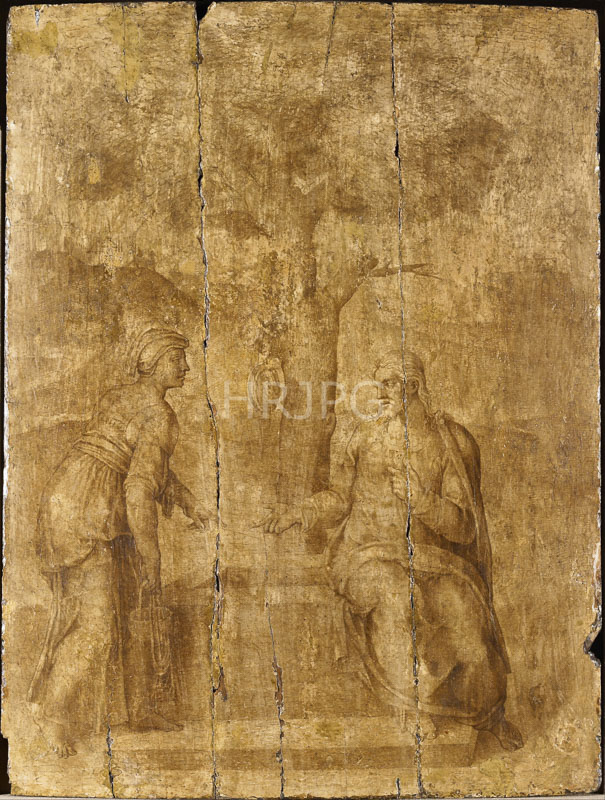
This drawing depicts the profound biblical encounter between Christ and the Samaritan woman at the well, a theme centered on the concepts of divine grace and inclusion. Michelangelo emphasizes the psychological interaction between the two figures through expressive gestures and a stable, balanced composition. Christ is shown seated with a commanding yet gentle presence, while the woman leans toward him in a state of spiritual awakening. The work reflects Michelangelo’s late interest in themes of spiritual dialogue and the vulnerability of the soul, likely influenced by his involvement with the "Spirituali" circle in Rome and his deep friendship with Vittoria Colonna. The composition is a masterclass in representing internal thought through external anatomical pose.
The technical execution of the drawing involves a sophisticated use of black chalk and wash, creating a powerful sense of three-dimensional volume and atmosphere. Michelangelo utilizes soft transitions between light and shadow—a late "sfumato"—to give the figures a luminous, living quality. He focuses on the tension in the hands and the focused gaze of the eyes to convey the "motions of the mind" during their dialogue. The architectural element of the well provides a stable anchor for the figures, while the surrounding landscape is simplified to ensure that the viewers focus remains on the sacred exchange. The muscular yet graceful forms of the characters reflect the artist’s lifelong commitment to the human body as the primary site of spiritual expression, even in his more contemplative late years.
Historically, this drawing was a highly influential image, disseminated through numerous copies and prints across Europe. It represents a shift in religious art toward a more intimate and direct engagement with the scriptures, reflecting the intellectual and theological climate of the mid-16th century. Technically, the work showcases Michelangelo’s ability to capture the ephemeral qualities of faith and revelation through a rigorous and disciplined visual language. Held in prestigious collections such as the Bodleian Library or the British Museum, "Christ and the Woman of Samaria" remains a vital subject of study for its unique synthesis of High Renaissance form and Counter-Reformation intensity. It stands as a hauntingly beautiful reminder of the power of the drawing to explore the deepest mysteries of human existence and divine intervention.