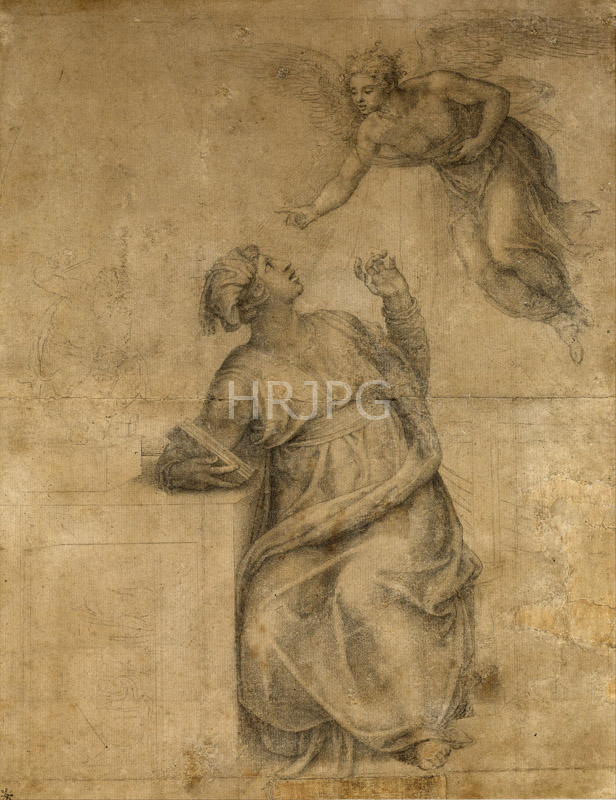
This black chalk drawing is a preparatory study for a late Annunciation scene, likely related to the artists projects in Rome during his final years. Michelangelo focuses on the profound spiritual and physical reaction of the Virgin Mary to the sudden arrival of the Angel Gabriel. Unlike traditional depictions that emphasize the Virgins quiet acceptance, Michelangelo portrays her in a state of startled, dynamic motion. Her body twists in a complex "figura serpentinata," conveying a sense of internal psychological turmoil and physical weight. The descending angel is rendered with lighter, more ethereal strokes, creating a powerful contrast between the divine messenger and the earthly vulnerability of the young Mary. This work is a masterclass in the representation of faith through the medium of the human body.
The technical execution of the study highlights Michelangelo’s late style, where the figures become more elongated and the modeling more expressive and atmospheric. He utilize vigorous hatching and subtle smudging to define the muscular ripples of the Virgin’s torso and the heavy folds of her robes. The use of black chalk allows for a range of tonal values, from delicate, soft shadows to intense, dark markings that emphasize the physical presence of the sacred event. The "non-finito" (unfinished) state of the drawing adds to its evocative power, inviting the viewer to witness the artists restless and visionary creative process. Michelangelo focuses on the hands and eyes as the primary vehicles of expression, capturing the very moment of divine interruption into human history.
Historically, this "Annunciation" reflects the spiritual intensity of Michelangelo’s late-life religious contemplations and his involvement with the Catholic reform movements. It represents a shift away from the idealized beauty of the High Renaissance toward a more emotionally raw and visionary style that would influence the development of Baroque art. Technically, the work showcases the artists ability to translate complex theological concepts into a visceral and enduring visual language. Held in prestigious collections such as the British Museum, this drawing remains a vital subject of study for its unique synthesis of anatomical rigor and spiritual depth. It stands as a hauntingly beautiful reminder of the power of the drawing to explore the deepest anxieties of the soul and the transformative nature of divine grace.