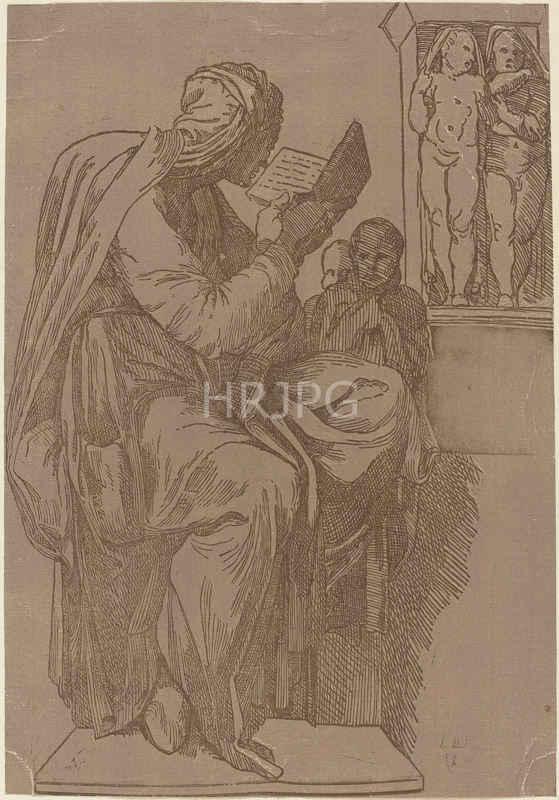
This chiaroscuro woodcut by the 18th-century English artist and collector John Skippe is a stylistic interpretation of the "Persian Sibyl" from Michelangelo’s Sistine Chapel ceiling. Using multiple woodblocks to achieve varied tonal values, Skippe successfully translates the monumental volume and sculptural weight of the original fresco into a graphic, printed medium. This work reflects the enduring 18th-century fascination with the High Renaissance and the "classical" ideal, as seen through the lens of British connoisseurship. Skippe was a key figure in reviving the chiaroscuro woodcut technique, utilizing it to capture the "terribilità" and the serene dignity of Michelangelo’s visionary prophetess for a modern audience of scholars and artists.
The technical execution of the print highlights the rhythmic flow of the heavy drapery and the stable, architectural pose of the Sibyl. Skippe uses the tonal blocks to create a powerful sense of three-dimensional space and atmospheric light, mimicking the effects of Michelangelo’s "chiaroscuro" on the chapel ceiling. The Sibyl is shown as an aged, monumental figure intently reading a book of prophecy, her form characterized by a sense of intellectual authority and spiritual focus. By isolating the figure, Skippe allows the viewer to appreciate the structural logic and the anatomical rigor of the masters design. The use of earthy, muted tones enhances the sense of ancient wisdom and permanent presence that defines the Sibylline cycle. This woodcut serves as a masterclass in graphic translation, preserving the essence of the original masterpiece.
Historically, Skippe’s prints after Michelangelo played a crucial role in the reception of the Sistine Chapel in Northern Europe, providing accessible models for the study of High Renaissance figure style. They reflect the 18th-century "Grand Tour" culture, where the works of the "Divine Michelangelo" were considered the ultimate foundation for artistic education. Technically, the "Persian Sibyl" showcases the versatility of the chiaroscuro woodcut to achieve painterly effects in a printed format. Held in prestigious collections such as the Metropolitan Museum or the British Museum, this work remains a vital piece of the Renaissance reception history. It stands as a testament to the enduring power of Michelangelo’s vision to speak across the centuries, providing a bridge between the sacred art of the 16th century and the scholarly traditions of the Enlightenment.