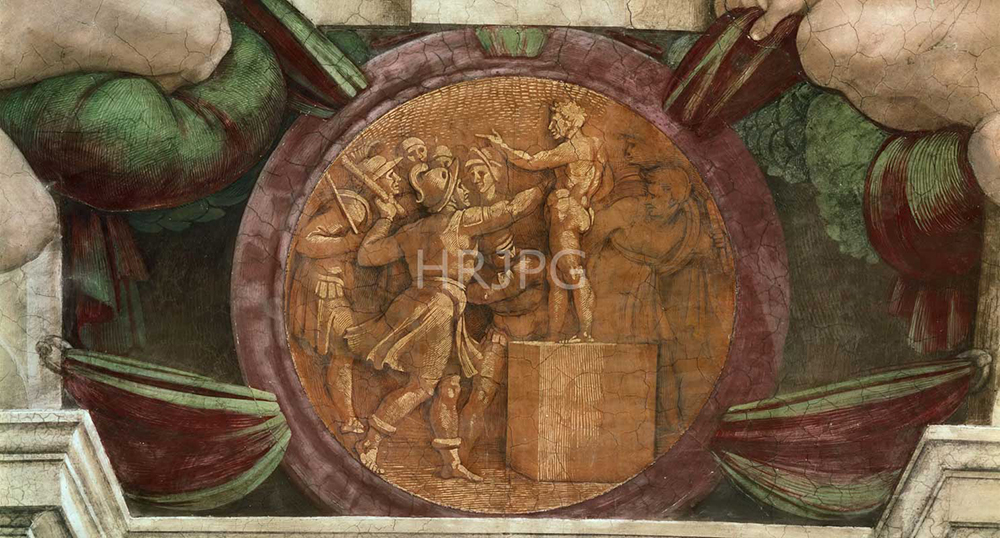
This bronze-colored medallion is one of ten decorative shields placed between the "Ignudi" on the Sistine Chapel ceiling. It depicts the biblical scene where the Jews destroy the statue of Baal, illustrating the triumph of monotheism over idolatry. Michelangelo utilizes the circular space of the medallion to create a dense, dynamic composition featuring multiple figures in a state of violent action. The work is rendered using an innovative "low-relief" technique in fresco, utilizing earth tones and metallic highlights to mimic the weight and texture of cast bronze. This decorative program serves to unify the various narrative and architectural elements of the ceiling, providing a layer of complex biblical history that supports the central Genesis panels.
The technical execution of the medallion showcases Michelangelo’s ability to coordinate complex group motions within a restricted circular frame. The figures are shown pulling down the idol with immense physical effort, their muscular anatomy and contorted poses reflecting the artists "terribilità." Michelangelo uses a focused "chiaroscuro" to project the action forward, creating a powerful sense of three-dimensional depth despite the flattened medium of fresco. The "bronze-finto" (fake bronze) effect is exceptionally convincing, achieved through a sophisticated layering of pigments that captures the play of light over an irregular, metallic surface. These medallions demonstrate the artists obsessive attention to detail, where even the secondary decorative elements are imbued with a monumental dignity and narrative energy that rivals the larger frescoes.
Historically, the medallions represent a link to the classical tradition of triumphal arches and celebratory shields. In the context of the Sistine Chapel, they reinforce the theme of divine intervention in human history and the struggle of the chosen people to maintain their faith. Michelangelo’s interpretation of the destruction of Baal reflects the religious and political anxieties of the papacy of Julius II, symbolizing the crushing of heresy and the defense of the Church. Technically, these works set a new standard for decorative fresco painting, influencing generations of artists who sought to master the "imitation of materials." They remain a vital subject of study for their unique synthesis of biblical narrative and sculptural effect, standing as a testament to Michelangelo’s enduring genius to transform every inch of the ceiling into a profound meditation on faith and power.