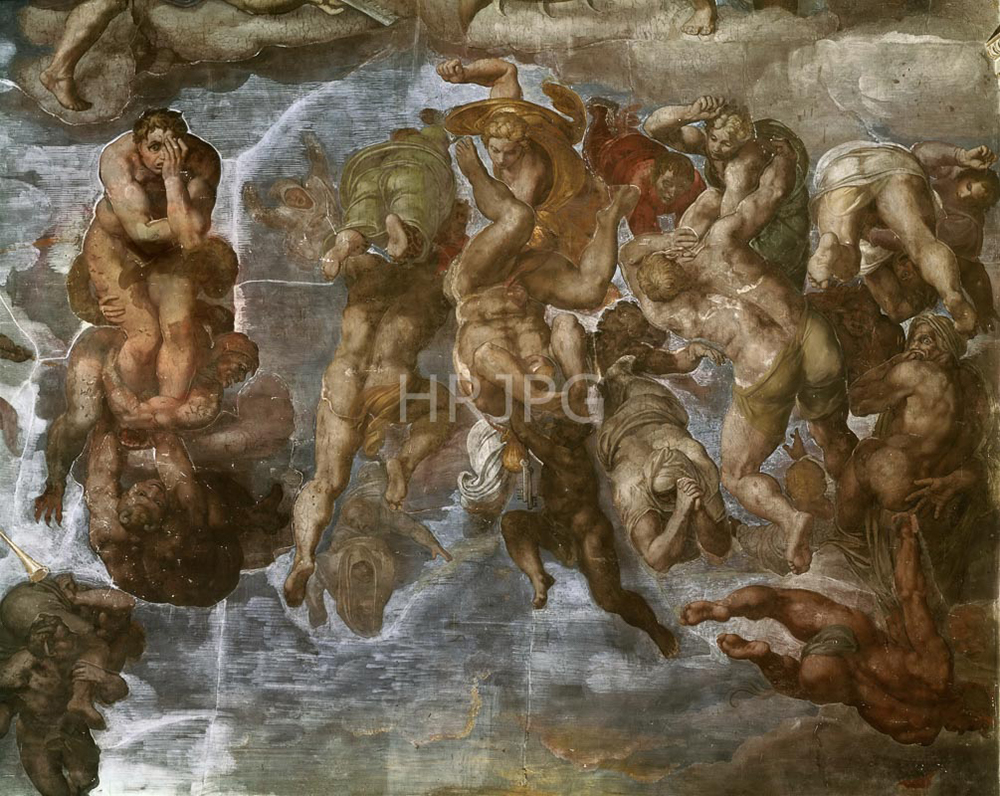
This dramatic detail from the lower right of "The Last Judgment" captures the chaotic and terrifying descent of the damned souls into hell. Michelangelo explores the full spectrum of despair and physical struggle, using heavy muscular forms and contorted groupings to convey the overwhelming psychological weight of eternal condemnation. Unlike the idealized figures of the ceiling, these souls are rendered with an expressive, almost Mannerist intensity, reflecting the spiritual anxiety of the Counter-Reformation period. The figures are shown intertwined in a frantic attempt to escape their fate, their bodies forming a swirling vortex of agony that underscores the raw power of divine justice. This detail is a masterclass in representing the human body in a state of total collapse.
The technical execution of the detail highlights Michelangelo’s late mastery of the fresco medium. He utilizes deep, bruised shadows and cold, somber skin tones to emphasize the physical reality of suffering. The use of "chiaroscuro" is exceptionally strong, projecting the muscularity of the figures forward while the background dissolves into a dark, claustrophobic abyss. Michelangelo focuses on the "motions of the mind" through anatomical contortion, showing the tension in the limbs and the horror in the eyes of the damned. Each figure possesses a unique identity and emotional state, from those screaming in terror to those frozen in a state of absolute resignation. This focus on individual human drama within a cosmic event is a hallmark of the masters late humanism, where the human form remains the primary vehicle for spiritual truth.
Historically, this section of "The Last Judgment" has been studied as a profound meditation on morality and the consequences of sin. Michelangelo’s departure from traditional representations of the judgment toward a more visceral and emotionally raw style set a new standard for religious art. Technically, the detail showcases the artists ability to organize a massive multi-figure composition while maintaining the psychological impact of each individual character. It remains one of the most powerful and challenging images in the history of art, standing as a testament to the enduring genius of an artist who captured the terrifying majesty of the divine will. By engaging with this detail, viewers gain insight into the restless and visionary spirit of a master who sought to capture the entire spectrum of human experience at the end of time.