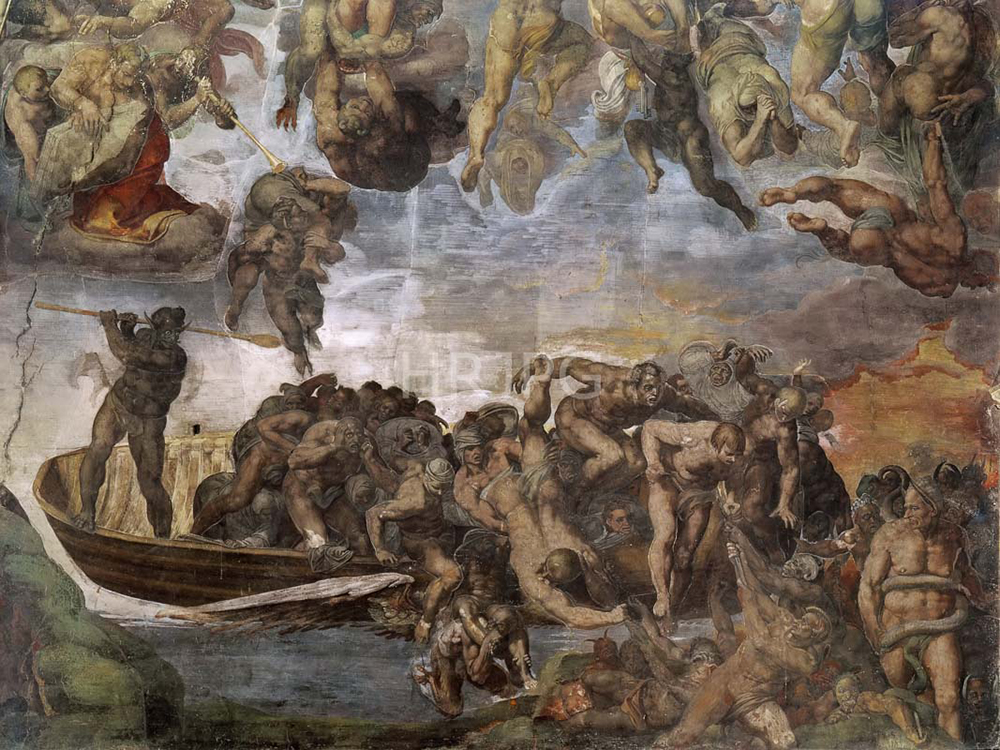
This lower right corner detail from "The Last Judgment" depicts Charon, the mythological ferryman, ferrying damned souls across the river Styx to the judges of the underworld, specifically Minos. Heavily inspired by Dante’s "Inferno," Michelangelo portrays Charon as a demonic, muscular figure standing in a small boat, using his oar to strike and drive the desperate souls toward their eternal fate. The scene is characterized by a sense of intense physical and emotional violence, with figures caught in a state of frantic panic and despair. This detail serves as the ultimate conclusion to the narrative of the judgment, representing the irrevocable nature of divine condemnation and the dark reality of the infernal regions as conceived during the mid-16th century.
The technical execution of this section highlights Michelangelo’s ability to combine biblical narrative with classical and literary imagery. Charon is modeled with a savage energy, his muscular torso and wild eyes reflecting the raw power of the demonic. The damned souls, crowded into the small vessel, are shown in various states of anatomical contortion and psychological angst. Michelangelo uses strong "chiaroscuro" to create a powerful sense of three-dimensional depth and rhythmic movement, with the dark waters of the Styx providing a somber, atmospheric background. The play of light across the bruised flesh and the aggressive gestures of the demons creates a visceral visual drama that projects the horror of the underworld into the viewers immediate space. This use of the "heroic" nude to represent the damned is a radical departure from traditional medieval iconography.
Historically, this detail has been admired for its psychological depth and its innovative approach to Dante’s poetry. Michelangelo’s focus on the physical weight and the individual tragedy of the damned reflects his own late-life contemplations on faith and justice. Technically, the work showcases the artists supreme mastery of the fresco medium under the most challenging conditions. It remains a vital subject of study for its role in the overall theological program of the Sistine Chapel, reminding the viewer of the absolute authority of God the Judge. Standing as a masterpiece of dramatic storytelling, "Charon’s Boat" is a testament to Michelangelo’s enduring status as a visionary who could bridge the gap between sacred history, classical mythology, and the deepest anxieties of the human soul at the dawn of the modern era.