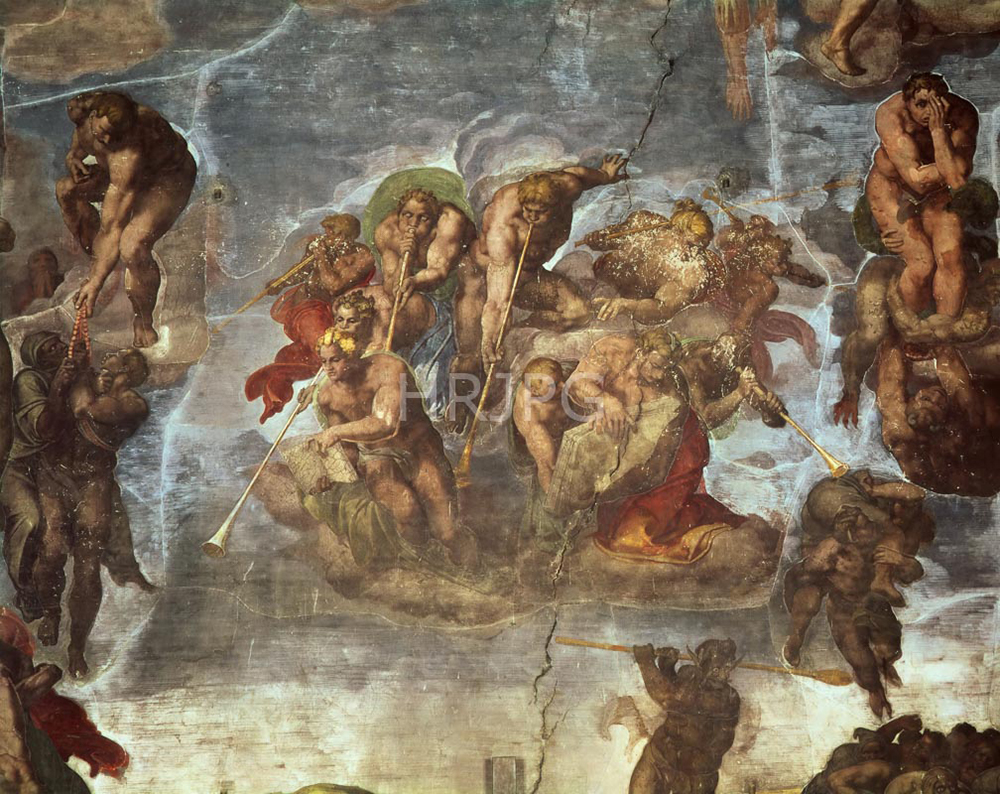
This central detail from "The Last Judgment" features the group of seven angels of the Apocalypse sounding their long trumpets to awaken the dead for the final reckoning. Michelangelo renders these celestial messengers as Herculean figures, their muscular anatomy tensed under the divine strain of their mission. Unlike the graceful, ethereal angels of earlier Renaissance traditions, these figures are shown with cheeks puffed and muscles rippling, emphasizing the physical effort required to announce the end of time. This dynamic and powerful representation underscores the terrifying majesty of the divine will and the cosmic scale of the event taking place on the altar wall of the Sistine Chapel.
The composition of the angel group creates a sense of rhythmic energy that radiates outward from the center of the fresco. Michelangelo utilize complex foreshortening to show the angels leaning over the clouds, their bodies twisting in space to reach all corners of the earth. The use of strong "chiaroscuro" projects their monumental forms forward, making them appear as solid, three-dimensional presences within the vast architectural space. The trumpets themselves serve as stable vertical and diagonal lines that anchor the swirling motion of the surrounding souls. The varying emotional states of the angels—from focused intensity to solemn awe—reflect the gravity of the spiritual transition they are facilitating, bridging the gap between the material world and the eternal realm of judgment.
Historically, this detail reflects Michelangelo’s interest in the biblical imagery of the Book of Revelation and the cultural influence of the Counter-Reformation. The focus on the raw power of the angels represents a departure from the idealized beauty of the High Renaissance toward a more visionary and emotionally charged style. Technically, the fresco demonstrates the artist’s supreme mastery of multi-figure arrangements and his ability to maintain narrative clarity across a colossal surface. These angels remain a cornerstone of Western religious art, standing as a testament to Michelangelo’s unique genius and his ability to translate the most profound mysteries of faith into a visceral visual language that continues to inspire awe in viewers. It provides a profound meditation on the power of the divine word and the inevitable arrival of the final spiritual reckoning for all of humanity.