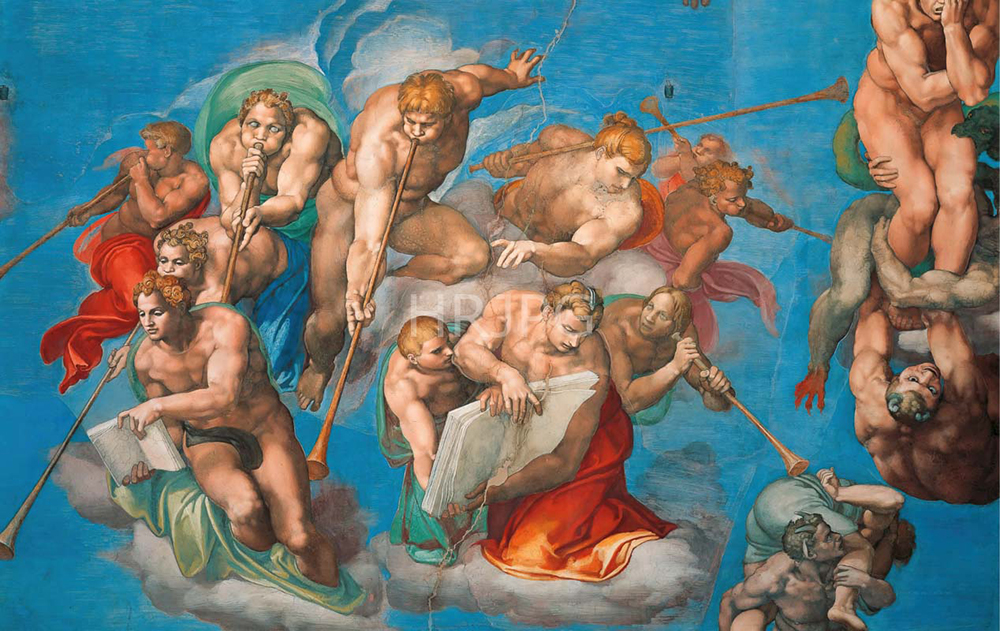
This central detail from "The Last Judgment" focuses on the seven angels of the Apocalypse, who are depicted with incredible physical and rhythmic energy as they sound their trumpets to initiate the end of time. Michelangelo portrays them as powerful, wind-swept figures, their Herculean anatomy tensed under the divine strain of their mission. This representation is a radical departure from the passive and ethereal angels of earlier centuries; here, they exert immense physical effort, with cheeks puffed and muscles rippling, emphasizing the reality of the divine intervention into human history. The trumpets themselves act as stable diagonal lines that lead the viewer’s eye through the swirling vortex of souls on the altar wall.
The technical execution of the angel group is a masterclass in the use of foreshortening and spatial organization. Michelangelo utilizes a sophisticated "chiaroscuro" to define the monumental volume of the figures, making them appear as three-dimensional beings emerging from the blue void of the judgment sky. The play of light over the tensed muscles and the heavy folds of their simple robes adds to the tactile realism of the scene. Each angel is rendered with a unique personality and emotional focus, reflecting the varied roles they play in awakening the dead and announcing the final reckoning. This focus on individual human drama within a cosmic event is a hallmark of Michelangelo’s late style, where the human form remains the primary vehicle for spiritual and narrative expression.
Historically, this detail has been studied for its innovative synthesis of biblical text and visionary aesthetic. The focus on the raw power of the celestial messengers reflects the spiritual intensity of the mid-16th-century Roman court and the influence of the Counter-Reformation. Technically, the fresco demonstrates Michelangelo’s supreme mastery of the medium and his ability to maintain narrative impact across a colossal architectural surface. These angels remain a cornerstone of Western art history, standing as a testament to the artist’s unique creative genius and his ability to capture the terrifying majesty of the divine will. It provides a profound meditation on the power of the prophetic voice and the transition from the material world to the eternal realm of divine justice, securing its place as an iconic image of the creative act itself.