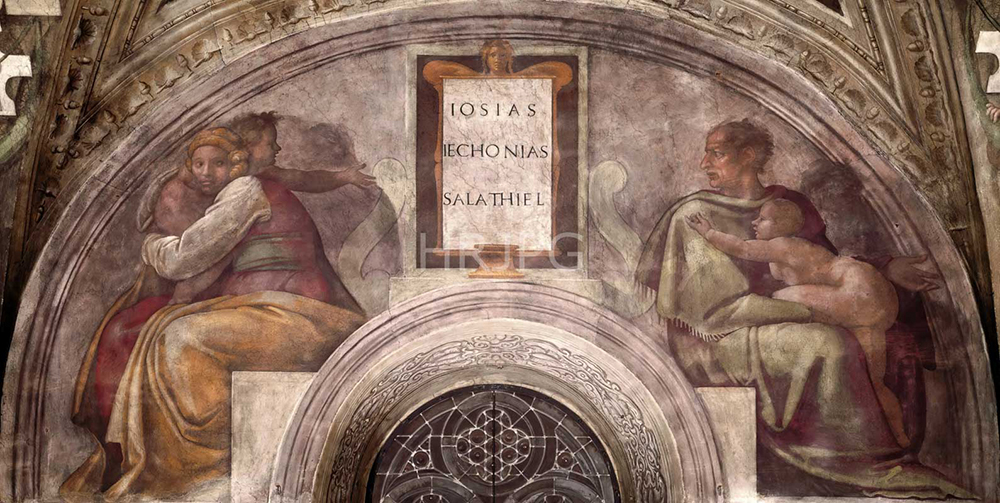
The lunette depicting the ancestors of Christ—Josias, Jechonias, and Salathiel—is part of the extensive genealogical cycle located above the windows of the Sistine Chapel. In this series, Michelangelo shifts from the heroic, divine energy of the central ceiling panels to a more human, domestic, and intimate atmosphere. The figures are seated in shallow, architectural niches, representing the generations of the House of Judah waiting for the fulfillment of the Messianic promise. This series is characterized by its muted color palette and a sense of heavy, contemplative stillness, reflecting the earthly weight of human history and the quiet, generational wait for salvation through the coming of Christ.
The composition is divided by a central tablet inscribed with the names of the ancestors. On one side, a figure is shown in a state of weary rest, his body modeled with a sculptural solidity that reflects Michelangelo’s background as a carver of stone. On the other side, a woman—likely representing the familial continuity of the lineage—is shown in a quiet, domestic pose. Michelangelo prioritize clear silhouettes and broad planes of color to ensure legibility from the floor below, a technical innovation that improved upon his earlier, more crowded panels like the "Deluge." The use of soft shadows and a restrained light source creates a mood of solemn dignity, highlighting the humanity of these ancestral figures who bridge the gap between the Old Covenant and the birth of the Savior.
Historically, the "Ancestors of Christ" series demonstrates Michelangelo’s incredible efficiency and confidence as a fresco painter during the final phase of the ceiling project. These works were executed with remarkable speed, featuring bold brushstrokes and minimal underdrawing compared to the central narrative panels. The artist explores the psychological interiority of his subjects, portraying them as individuals burdened by time and the long reach of sacred history. This work is significant for its role in the overall theological program of the chapel, reminding the viewer that divine intervention is rooted in human history and familial succession. It remains a vital subject of study for its innovative approach to monumental figure grouping and its profound exploration of the quiet, unheroic aspects of the divine plan for humanity.