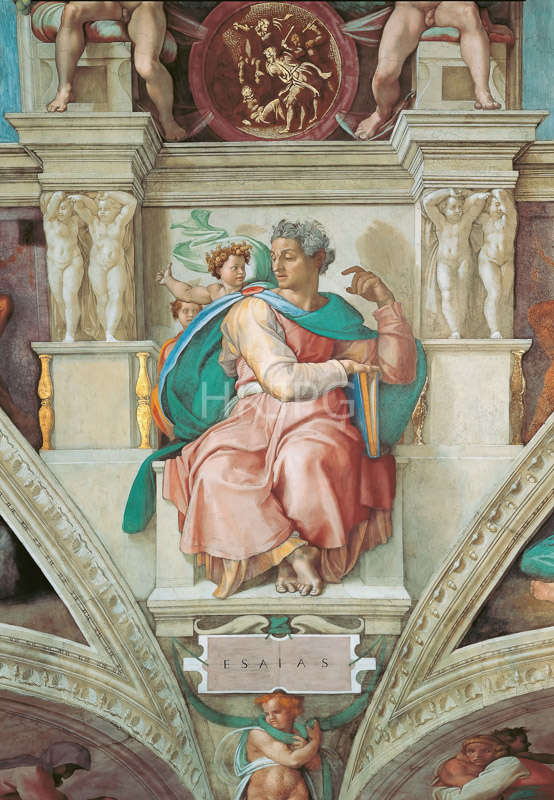
The Prophet Isaiah is depicted by Michelangelo in a moment of intellectual pause and spiritual interruption, his body turned as if he has just been distracted while reading a large book of prophecy. Positioned in an architectural niche on the Sistine ceiling, Isaiah is rendered with a youthful face and elegant blue and yellow robes that convey a sense of grace and visionary focus. One of the major prophets, his presence represents the divine inspiration guiding the words for the coming Savior. Michelangelo utilizes a complex "figura serpentinata" to create a rhythmic harmony and a sense of potential energy, showcasing his unrivaled mastery of the human form as the primary site of spiritual revelation during the High Renaissance.
The technical execution of Isaiah highlights the balance between monumental weight and lyrical elegance characteristic of the ceiling’s middle phase. Michelangelo utilize strong "chiaroscuro" to define the muscular ripples of the torso and the deep, articulated folds of the drapery, making the prophet appear as a solid, sculptural presence. The interaction with the youthful cherub behind him suggests the celestial source of his knowledge, providing a sense of depth and narrative movement. The focused, slightly startling expression on Isaiah’s face captures the "motions of the mind" as he processes a divine message, reflecting the Renaissance belief that beauty and intellect are inextricably linked to the sacred. The clarity of the drawing and the vibrancy of the colors make him one of the most striking and legible figures from the chapel floor.
Historically, Isaiah is significant for his specific prophecies concerning the Messiah and the Virgin Mary, making him a central figure in the theological link between the Old and New Testaments. Michelangelo’s interpretation avoids traditional static iconography, introducing a sense of psychological depth and physical energy that revolutionized the representation of prophets in Western art. This work has inspired countless artists for its perfect proportions and its unique synthesis of physical power and intellectual dignity. It remains a cornerstone of the Sistine decorative program, standing as an enduring testament to Michelangelo’s unique genius and his ability to translate the deepest mysteries of faith into a visceral and enduring visual language. Isaiah serves as a hauntingly beautiful reminder of the power of the prophetic spirit to bridge the gap between human understanding and divine truth.