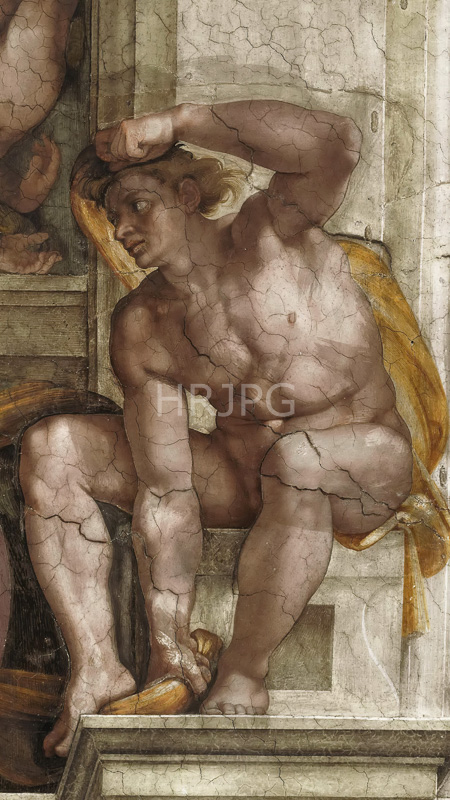
Ignudo 09 is one of the twenty decorative nude youths that frame the smaller narrative panels of the Sistine Chapel ceiling. Positioned near the "Separation of Light from Darkness," this figure exemplifies Michelangelo’s obsession with the male nude as the ultimate vehicle for artistic expression. The Ignudi serve as a transition between the architectural framework and the sacred Genesis narratives, holding garlands of oak leaves and acorns—symbols of the Della Rovere family of Pope Julius II. Michelangelo utilizes a complex, seated pose that emphasizes physical tension and rhythmic harmony, showcasing his unrivaled mastery of human anatomy. These figures are not directly biblical but represent the perfection and heroic potential of the human soul in the presence of the divine.
The technical execution of Ignudo 09 demonstrates a sophisticated use of "chiaroscuro" and "figura serpentinata." Michelangelo models the torso with a stone-like solidity, using deep shadows to define the muscular ripples and the skeletal structure. The figure’s twisting motion creates a sense of three-dimensional volume, making him appear as a sculptural presence that projects from the ceiling into the viewer’s space. Unlike the more static decorative figures of earlier Renaissance traditions, Michelangelo’s Ignudi are active and emotionally charged, their varied poses reflecting the artist’s search for anatomical perfection and spatial innovation. The soft transitions of light across the skin give the youth a luminous, living quality that contrasts with the rigid architectural elements of the chapel.
Historically, the Ignudi were highly influential, setting a new standard for the representation of the human body in Western art. They were extensively studied and copied by generations of Mannerist and Baroque artists who sought to capture the "terribilità" and the heroic scale of Michelangelo’s vision. In the context of the overall decorative program, Ignudo 09 contributes to a sense of unified energy that links the individual narrative scenes into a singular, cosmic event. This figure stands as a testament to Michelangelo’s belief that the human form is the highest expression of divine spirit and beauty. It remains a vital subject of study for its technical brilliance and its role in the evolution of High Renaissance artistic idealism toward a more expressive and visionary style.