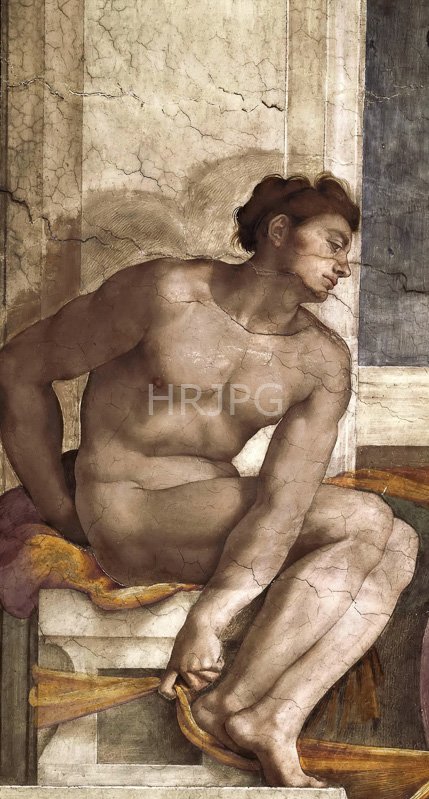
Ignudo 10 is a magnificent example of the decorative figure program on the Sistine Chapel ceiling, positioned symmetrically to balance the composition of the smaller Genesis panels. Michelangelo depicts this youth in a state of graceful, rhythmic repose, his body modeled with a meticulous attention to anatomical detail. Like the other Ignudi, he holds silk ribbons and garlands of oak leaves, serving as both a decorative motif and a symbolic tribute to the papal patron, Julius II. The figure’s pose is a masterclass in the use of foreshortening and spatial perspective, creating a sense of three-dimensional depth that was unprecedented in fresco painting of the early 16th century. He represents the synthesis of classical physical beauty and Christian spiritual dignity.
The technical execution of Ignudo 10 showcases Michelangelo’s ability to infuse monumental weight into the human form. He utilize a sophisticated layering of pigments to create soft skin textures and powerful muscular definition. The play of light across the youth’s torso emphasizes the sculptural volume, making him appear as a living being carved from the very atmosphere of the chapel. Michelangelo’s focus on the "motions of the mind" is evident in the youth’s focused yet slightly melancholic expression, suggesting an internal psychological state that transcends his role as a mere architectural ornament. The harmonious arrangement of limbs creates a sense of potential energy, as if the figure is about to shift from his seated position into dynamic action, reflecting the "terribilità" characteristic of the master’s work.
Historically, Ignudo 10 and his counterparts revolutionized the decorative traditions of the Renaissance, moving away from flat, ornamental patterns toward a more heroic and three-dimensional approach. These figures were seen as a bridge between the material world and the sacred history depicted in the central panels. They reflect the intellectual climate of Rome, where Neo-Platonic philosophy and biblical theology were synthesized through the medium of the visionary image. Technically, the fresco demonstrates Michelangelo’s supreme confidence and his ability to maintain narrative impact across a colossal surface. Ignudo 10 remains a cornerstone of Western art history, standing as an enduring testament to the genius of an artist who captured the entire spectrum of human and divine experience within a singular, crystalline visual language of peak elegance.