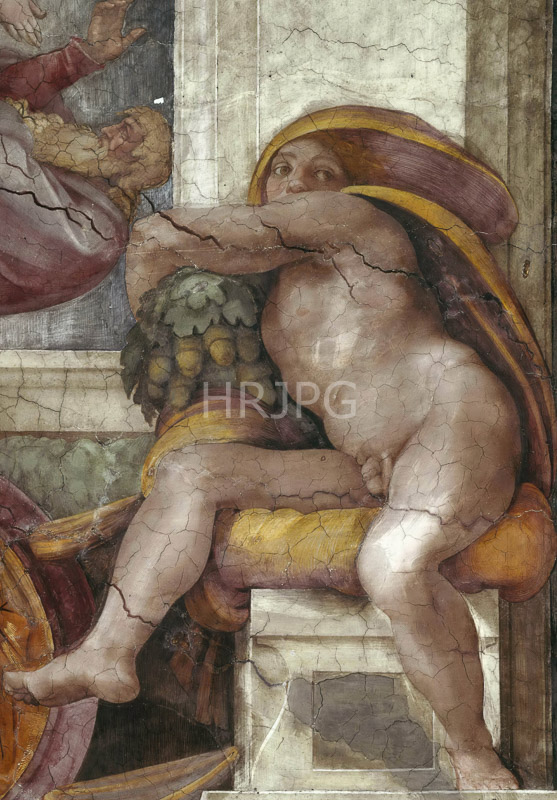
Another of the magnificent decorative nudes from the final phase of the Sistine ceiling, this Ignudo is shown experimenting with a complex silhouette and a radical spatial arrangement. Positioned near the Libyan Sibyl, he contributes to the peak of aesthetic elegance and anatomical rigor that defines the last panels Michelangelo painted. The youth is depicted in a seated position, his body twisting in a way that showcases the artist’s unrivaled ability to represent the human form from challenging perspectives. This focus on the "figura serpentinata" and the rhythmic interaction between the limbs creates a sense of fluid, celestial motion that transcends the physical weight of the muscular anatomy. The figure represents the perfection of the soul in a state of visionary awareness.
The technical execution of this Ignudo showcases the use of bold brushstrokes and a sophisticated tonal range. Michelangelo utilize a range of "chiaroscuro" to create deep shadows and brilliant highlights, emphasizing the physical volume of the torso and the delicate modeling of the features. The play of light over the tensed muscles and the soft, articulated folds of the ribbons adds a powerful sense of tactile realism. The youth’s expression is one of focused intensity, reflecting the spiritual and prophetic weight of the surrounding Sibyls and Prophets. This focus on the individual psychological state within a decorative program was a revolutionary innovation that would deeply influence the transition into Mannerism and the Baroque, where the human body became a site of extreme emotional and spiritual expression.
Historically, the Ignudi near the Libyan Sibyl were praised for their heroic scale and their contribution to the ceiling’s unified dramatic energy. They reflect Michelangelo’s full maturity as a painter and his ability to translate his scientific studies of the human body into a visceral visual language of faith and judgment. Technically, the fresco demonstrates the artist’s supreme confidence in the medium and his ability to maintain narrative impact across a colossal surface. These figures remain a cornerstone of Western art history, standing as an enduring testament to the genius of an artist who captured the entire spectrum of human experience within a crystalline visual language. By studying this specific Ignudo, scholars gain insight into the restless creative process of a master who sought to capture the deepest mysteries of the divine plan through the medium of the heroic human form.