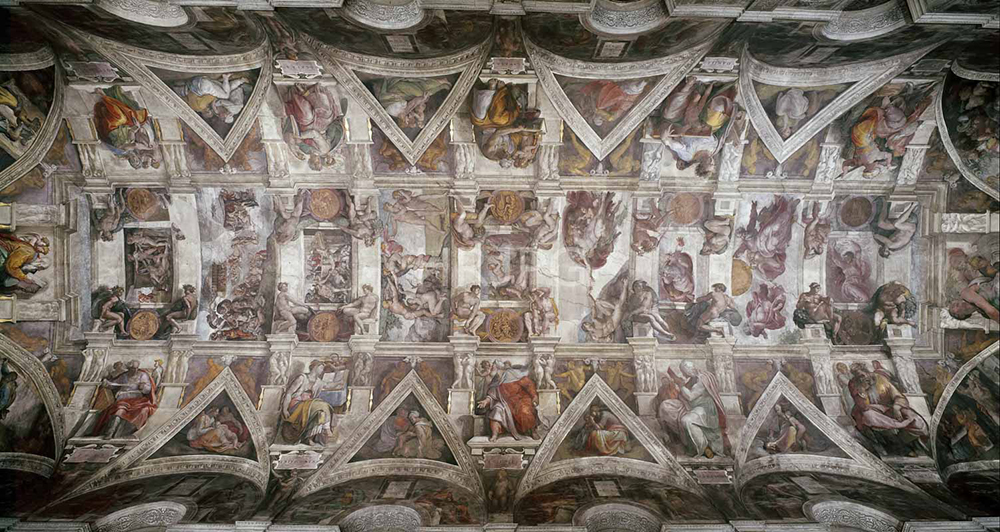
The Sistine Chapel ceiling is a monumental achievement in the history of Western art, comprising a vast and complex decorative program of over three hundred figures. Commissioned by Pope Julius II, Michelangelo spent four years of intense physical and intellectual labor painting the ceiling’s vault, transforming it into a visionary cycle of human history and divine redemption. The central panels depict nine scenes from the Book of Genesis, moving from the Separation of Light from Darkness to the Drunkenness of Noah. Surrounding these narratives are the heroic figures of Old Testament Prophets and Pagan Sibyls, along with the genealogical cycle of the Ancestors of Christ. This work revolutionized the visual language of religious art through its unprecedented focus on the dramatic potential and the monumental dignity of the human form.
The technical execution of the ceiling is a tour de force of fresco painting, showcasing Michelangelo’s transition from the stable, classical styles of his youth toward a more dynamic, expressive, and visionary aesthetic. He utilized his deep understanding of human anatomy to create figures that possess a stone-like solidity and a powerful sense of three-dimensional volume. The use of "chiaroscuro," foreshortening, and a vibrant, saturated color palette creates a sense of rhythmic harmony that unifies the diverse narrative and architectural elements. Michelangelo’s innovative approach to spatial organization and his focus on the "motions of the mind" through anatomical pose set a new standard for Western painting, influencing generations of artists from the Mannerist and Baroque eras across the cities of Europe. The ceiling serves as a profound meditation on human potential, divine grace, and the majesty of the sacred history.
Historically, the Sistine ceiling was immediately recognized as a peak of artistic achievement, establishing Michelangelo as the "Divine" master of his age. It reflects the intellectual climate of the Renaissance, where classical philosophy, scientific observation, and biblical theology were synthesized into a singular, monumental vision. Despite the extreme physical challenges and political pressures of the commission, Michelangelo produced a work of eternal significance that continues to inspire awe in viewers from around the world. Technically, the ceiling remains a masterclass in the application of the fresco medium on a colossal scale. It stands as a testament to the enduring power of the visionary image to capture the deepest mysteries of faith and the human condition, securing its place as the foundational masterpiece of the High Renaissance and a cornerstone of global cultural heritage.