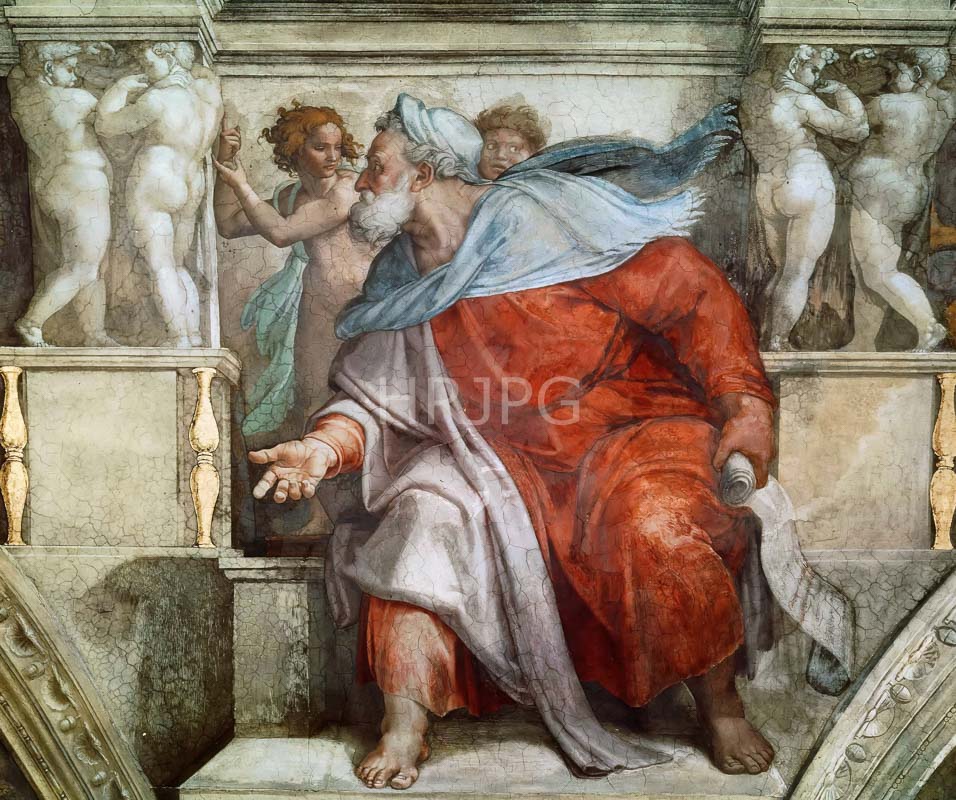
The Prophet Ezekiel is depicted by Michelangelo in a state of intense intellectual and spiritual energy, his body turned in a sudden, dynamic motion as if reacting to an overwhelming divine vision. Positioned in a large architectural niche on the Sistine ceiling, Ezekiel is rendered as a monumental figure with powerful robes and an expressive, focused face that radiates a formidable authority. He holds a scroll of prophecy, his body twisting in a complex "figura serpentinata" that conveys a sense of internal psychological struggle and physical weight. This representation reflects the tumultuous and creative spirit of the Renaissance, where the prophet is shown as a heroic individual burdened by the terrifying responsibility of communicating the divine word to humanity.
The technical execution of Ezekiel highlights Michelangelo’s mastery of volume and dramatic movement. He utilize strong "chiaroscuro" and bold brushstrokes to define the muscular ripples of the torso and the heavy, articulated folds of the drapery, making the prophet appear as a sculptural presence that surges forward from the wall. The focused gaze and the frantic gesture of the hand convey a profound state of spiritual alertness and intellectual realization, embodying the peak of High Renaissance artistic idealism. The two youthful cherubs behind him provide a sense of narrative depth and divine inspiration, their smaller scale highlighting the colossal proportions of the prophet. Michelangelo uses the surrounding architectural framework to anchor the figure, making him appear as a permanent, immovable pillar of ancient wisdom within the vast decorative program of the chapel.
Historically, Ezekiel’s prophecy concerning the "vision of the dry bones" and the spiritual renewal of the people links him to the central themes of resurrection and divine justice found elsewhere in the chapel. Michelangelo’s interpretation avoids traditional static iconography, introducing a sense of psychological raw energy and physical tension that would influence the development of Mannerist art across Europe. This work has been admired for centuries for its perfect proportions and its unique synthesis of physical power and intellectual dignity. It remains a cornerstone of the Sistine decorative program, standing as an enduring testament to Michelangelo’s unique genius and his ability to translate the deepest mysteries of faith into a visceral and enduring visual language of peak elegance. Ezekiel serves as a hauntingly beautiful reminder of the power of the prophetic spirit at the dawn of the modern era.