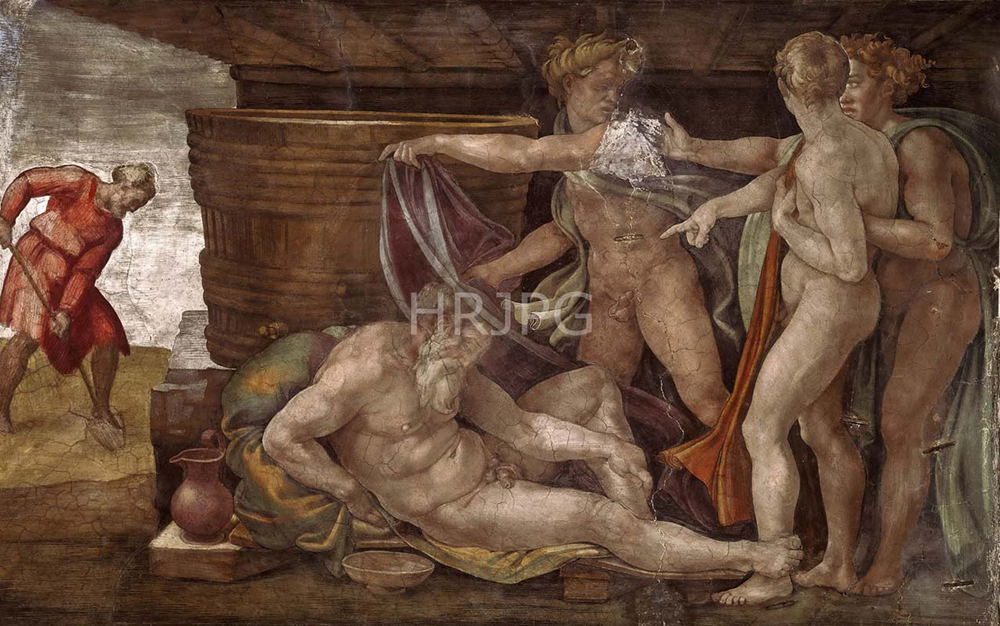
The Drunkenness of Noah is the final panel of the Genesis narrative cycle on the Sistine Chapel ceiling (chronologically in history, but one of the first painted by Michelangelo). It depicts the biblical story from Genesis 9, where Noah, having planted a vineyard after the flood, becomes drunk and is discovered uncovered by his three sons. Michelangelo focuses on the physical presence of the figures and the heavy drapery, illustrating the transition from youthful, heroic idealism to the realities of common human frailty and the vulnerability of old age. The scene is characterized by a stable, relief-like composition that reflects the artists early stylistic training in Florence, emphasizing the weight and volume of the figures within a simplified architectural and landscape setting.
The technical execution of this fresco showcases Michelangelo’s early mastery of the human form in various challenging poses. The reclining figure of Noah is modeled with a startling naturalism, his muscular yet aging body serving as a poignant anatomical study. The different reactions of his three sons—from the mockery of Ham to the respectful shielding by Shem and Japheth—provide a range of psychological and emotional states that Michelangelo captures through expressive gestures and focused gazes. The use of "chiaroscuro" creates a powerful sense of three-dimensional volume, while the muted, earthy color palette underscores the somber and domestic nature of the narrative. Despite the secondary status of the scene compared to the "Creation of Adam," Michelangelo imbues it with a monumental dignity that elevates the subject into a profound meditation on human morality.
Historically, the "Drunkenness of Noah" provided Michelangelo with essential lessons in scale and legibility for the chapel’s vast ceiling. It reflects the Renaissance interest in the "imitation of nature" and the moralizing potential of biblical stories. In the context of the overall program, the scene serves as a reminder of the need for divine grace and the fallen state of humanity after the flood. Technically, the fresco demonstrates the artists ability to organize a multi-figure composition while maintaining the individual psychological depth of its characters. It remains a masterpiece of narrative economy and formal innovation, standing as an enduring testament to Michelangelo’s unique vision of the human condition. By engaging with this panel, viewers gain insight into the beginning of the artists creative journey on the ceiling, where he sought to capture the entire spectrum of human experience across sacred history.