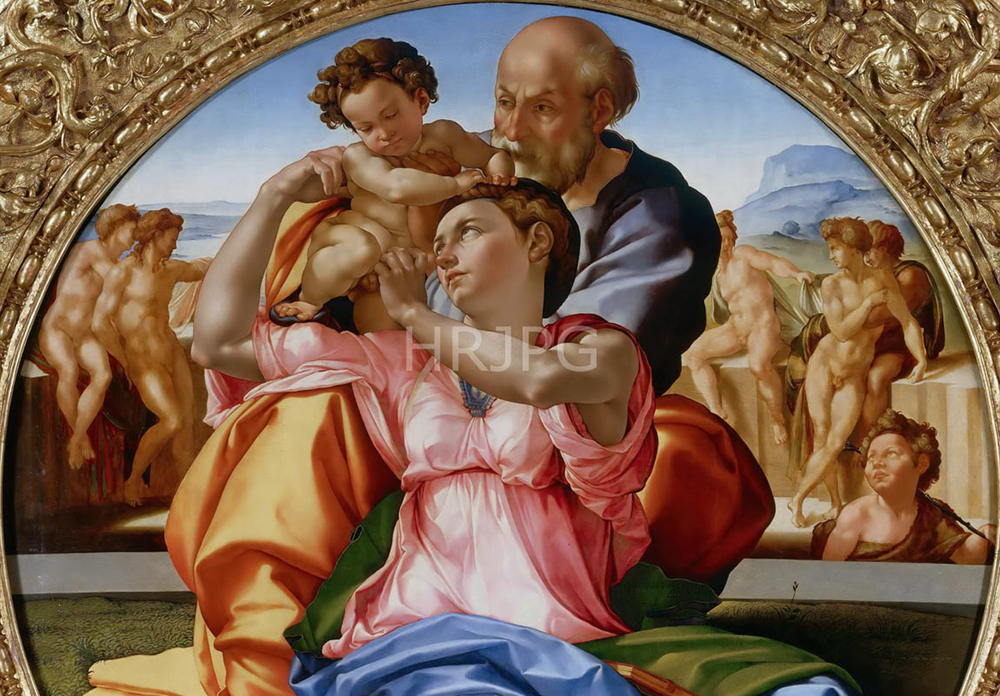
This specific detail from the Doni Tondo focuses on the central interaction between the Virgin Mary, Saint Joseph, and the Christ Child, highlighting the extraordinary anatomical complexity and emotional intimacy of Michelangelo’s composition. The detail captures the moment the Virgin reaches back in a powerful, spiraling motion to receive the child, a pose that showcases the artist’s mastery of "figura serpentinata." Michelangelo treats the figures as a single, integrated block of marble, focusing on the physical tension and the rhythmic harmony of their limbs. The Christ Child, perched on Joseph’s shoulder, is rendered with a remarkable naturalism, his soft, youthful anatomy contrasting with the monumental and muscular forms of the adults. This focus on the "motions of the mind" through anatomical pose is a hallmark of the High Renaissance style.
The modeling of the flesh in this detail demonstrates Michelangelo’s unique approach to the medium of tempera and oil. He utilize delicate hatching and smooth transitions to create a sense of three-dimensional volume that feels tangible and solid. The play of light across the Virgins arm and the Christ Childs torso emphasizes the sculptural quality of the painting, making the figures appear as if they are surging out of the picture plane. The "cangiantismo" technique is clearly visible in the shifting hues of the garments, where the shadows are rendered in a different color than the highlights to maintain the vibrancy of the palette. This technical refinement reflects the artists belief that the human form is the highest expression of divine spirit, capable of communicating the most profound mysteries of faith through physical beauty and grace.
Historically, this central group has been admired for its departure from the passive and static Holy Families of earlier traditions. Michelangelo introduces a sense of domestic effort and shared responsibility, reflecting the humanists’ interest in the dignity of familial bonds. By isolating this detail, scholars and viewers can appreciate the meticulous craftsmanship and the intellectual rigor that Michelangelo brought to every fragment of the circular panel. It remains a hauntingly beautiful reminder of the sacred origins of the family and the artist’s ability to transform a traditional devotional subject into a profound meditation on human potential and divine grace. Standing as a masterpiece of narrative economy and formal innovation, this detail captures the very essence of Michelangelo’s creative spirit at the dawn of his monumental Roman career.