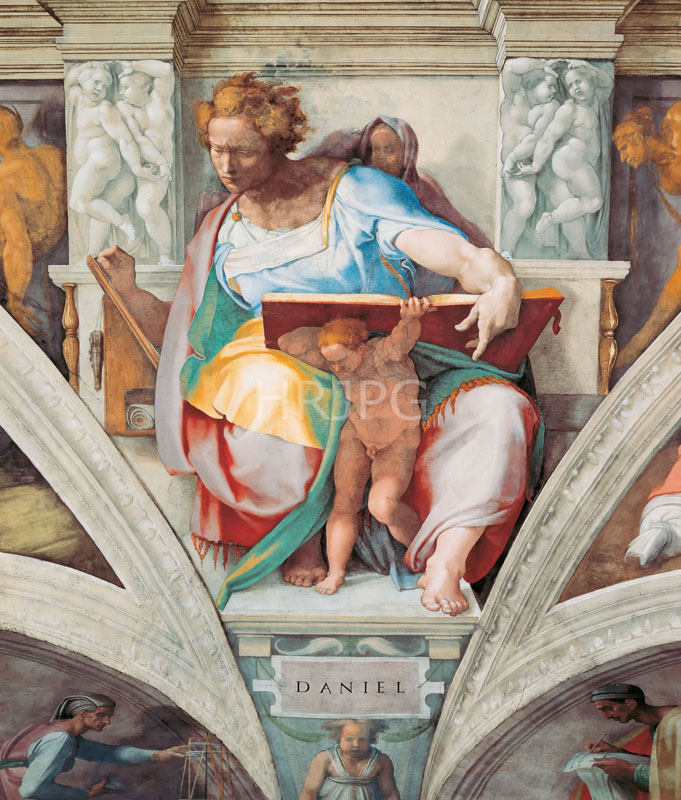
The Prophet Daniel is one of the seven Hebrew prophets depicted on the Sistine Chapel ceiling, representing the intellectual energy and the visionary focus of divine revelation. Michelangelo portrays Daniel as a youthful and monumental figure, seated in an architectural niche and intently reading a large, heavy book which is supported by a smaller youth. This representation highlights the theme of spiritual study and the weight of scriptural authority. Daniel’s body is positioned in a dynamic, foreshortened pose, with his powerful legs and flowing blue robes creating a sense of three-dimensional space and potential energy. He represents the intuitive power of the soul to perceive the divine plan, standing as a peak achievement of High Renaissance artistic idealism.
The technical execution of Daniel highlights Michelangelo’s shift toward larger and more heroic figure types during the ceiling project. He utilize strong "chiaroscuro" and a vibrant color palette of blue, yellow, and green to model the features and the rhythmic folds of the drapery. The focused expression on Daniel’s face and the frantic motion of his writing hand convey a state of intense intellectual concentration, mirroring the restless creative spirit of the artist himself. The two youthful cherubs behind him provide a sense of narrative depth and divine inspiration, their smaller scale highlighting the colossal proportions of the prophet. Michelangelo uses the surrounding architectural framework to anchor the figure, making him appear as a permanent, immovable pillar of biblical wisdom within the vast decorative program of the chapel.
Historically, Daniel’s prophecy concerning the kingdom of God and the end of days links him to the central themes of judgment and redemption found elsewhere on the ceiling and the altar wall. Michelangelo’s interpretation avoids traditional static iconography, introducing a sense of psychological raw energy and physical tension that revolutionized the representation of prophets in Western art. This work has been admired for centuries for its perfect proportions and its unique synthesis of physical power and intellectual dignity. It remains a cornerstone of the Sistine decorative program, standing as an enduring testament to Michelangelo’s unique genius and his ability to translate the deepest mysteries of faith into a visceral and enduring visual language of peak elegance. Daniel serves as a hauntingly beautiful reminder of the power of the prophetic spirit at the dawn of the modern era.