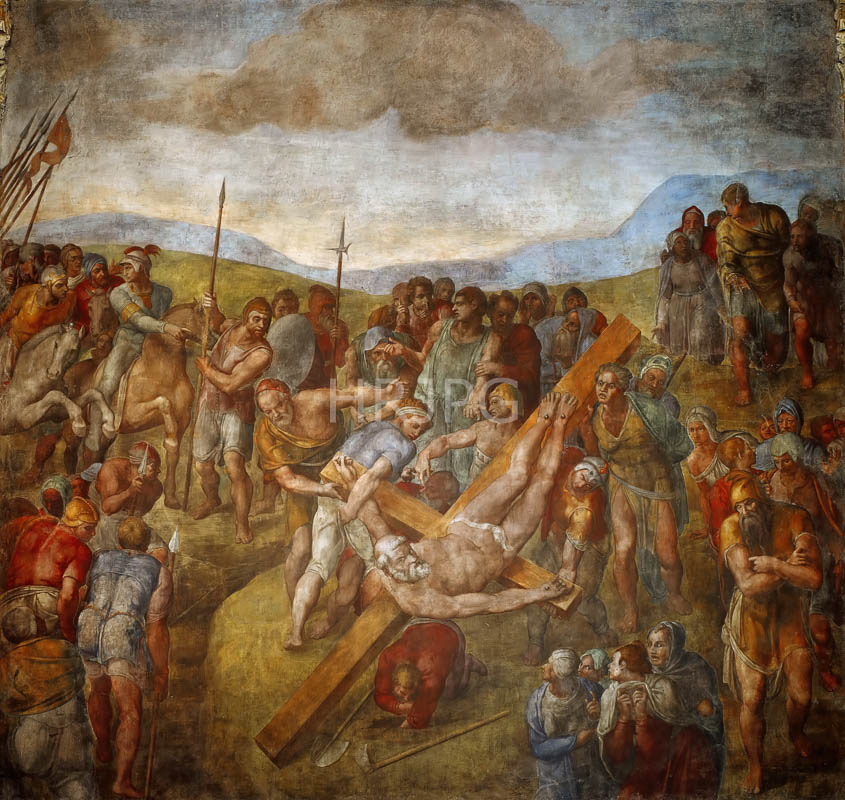
The Crucifixion of Saint Peter is one of the two monumental frescoes Michelangelo painted for the Pauline Chapel (Cappella Paolina) in the Vatican during his final years. This late masterpiece depicts the martyrdom of the first Pope, who requested to be crucified upside down because he felt unworthy to die in the same manner as Christ. Michelangelo focuses on the psychological gravity and the somber reality of the event, showing Peter being raised onto the cross amidst a dense, swirling crowd of Roman soldiers and mourning followers. The work reflects the artist’s late stylistic shift toward a more elongated, expressive, and emotionally raw visual language, departing from the idealized beauty of his earlier years in favor of a profound spiritual intensity.
The technical execution of the "Crucifixion" is characterized by a somber color palette and a powerful use of "chiaroscuro" to create a sense of atmospheric weight. The figure of Saint Peter, despite his aged and vulnerable state, possesses a monumental and heroic muscularity that reflects his spiritual strength. His focused gaze, directed toward the viewer or the heavens, conveys a sense of absolute resolve and divine acceptance. Michelangelo utilize a complex, multi-layered composition to show the varied reactions of the crowd—from those performing the brutal task of the execution to those frozen in a state of silent grief. This focus on individual human drama within a collective historical event is a hallmark of the masters late humanism, where the human body remains the primary site of both physical suffering and spiritual victory.
Historically, this fresco was commissioned by Pope Paul III and serves as a vital document of the Counter-Reformation’s emphasis on the authority of the papacy and the dignity of martyrdom. Michelangelo’s interpretation avoids the overtly celebratory or dramatic poses of the High Renaissance, instead providing a visceral and disturbing meditation on the cost of faith. Technically, the work showcases the artists supreme mastery of the fresco medium on a colossal scale, even in his late seventies. It stands as a hauntingly beautiful icon of the "non-finito" spirit, where the power of the vision transcends the material finish. It remains one of the most intellectually challenging and emotionally resonant religious images ever created, standing as a testament to the unique genius of an artist who captured the entire spectrum of human and divine experience at the end of his long and restless career.