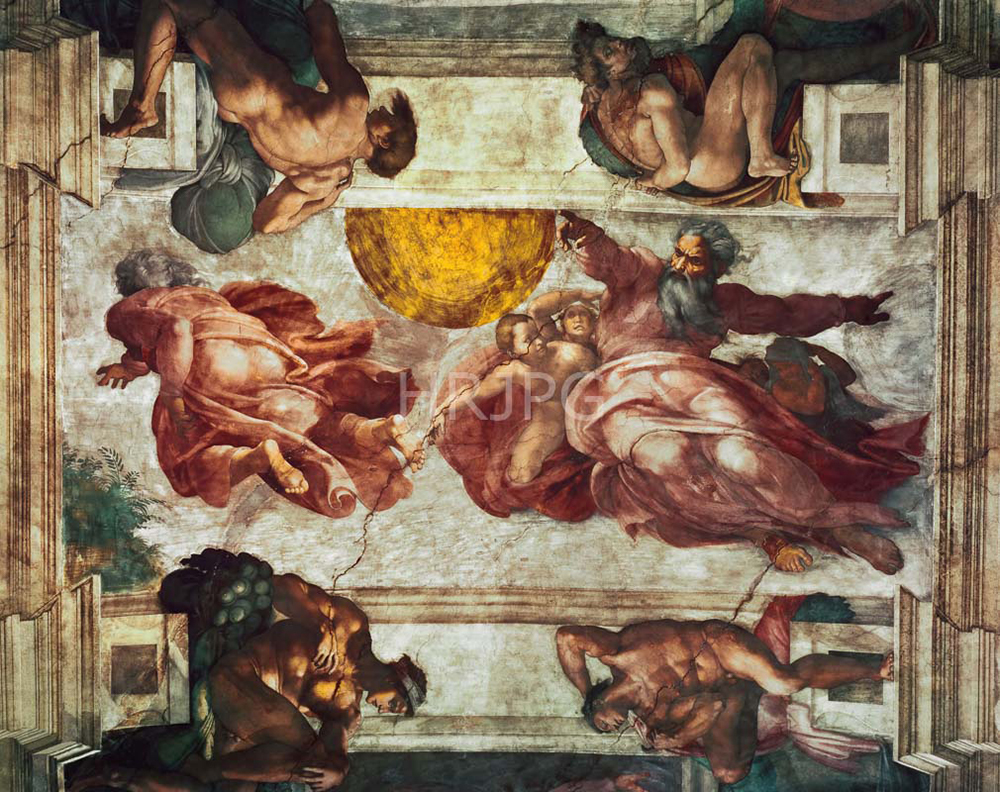
The Creation of the Sun Moon and Plants is one of the most dynamic and energetically charged panels on the Sistine Chapel ceiling, depicting the second and third acts of the Genesis narrative. Michelangelo utilizes a "simultaneous narrative" technique, showing God the Father twice in rapid succession. On the right, the Creator is seen from a majestic, foreshortened perspective, his hands outstretched to bring forth the celestial bodies—the brilliant sun and the cool, pale moon. On the left, he is shown from behind as he moves away to create the vegetation on the earth. This composition captures the raw, explosive energy of divine will, shifting the focus from static iconography to a visceral, rhythmic act of creation that fills the architectural space of the vault.
The technical execution of the figure of God is a tour de force of Michelangelesque "terribilità." He utilize strong "chiaroscuro" to define the physical volume and the muscularity of the torso, making the divine figure appear to surge out of the background into the viewer’s immediate space. The swirling motion of his billowing robes and the twisting "figura serpentinata" pose exemplify the High Renaissance search for a perfect synthesis of power and grace. The contrast between the radiant light of the sun and the soft shadows of the receding figure creates a powerful visual drama that unifies the composition. Michelangelo’s use of aerial perspective in the simplified landscape highlights the cosmic scale of the event, focusing the viewer’s attention entirely on the absolute authority of the divine architect during the formation of the universe.
Historically, this panel represents the peak of Michelangelo’s visionary approach to the biblical text. It reflects the intellectual climate of the Roman court during the papacy of Julius II, where the power of the Church was celebrated through grand, heroic artistic programs. Technically, the fresco demonstrates the artist’s supreme mastery of the medium and his ability to work under the most challenging physical conditions to produce a work of eternal significance. This specific scene remains one of the most admired on the ceiling, standing as a testament to Michelangelo’s unique genius and his ability to translate complex theological concepts into a visceral and enduring visual language. It provides a profound meditation on the sacred origins of the natural world and the search for spiritual truth through the medium of the heroic human form.