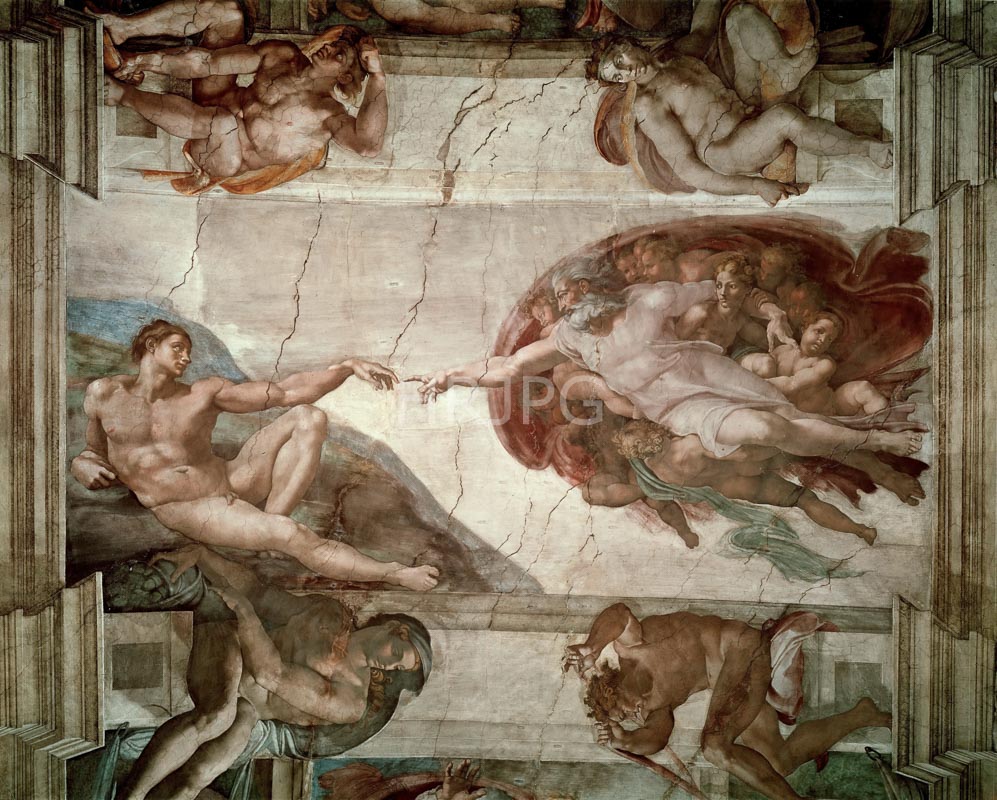
The Creation of Adam is the most celebrated and iconic panel on the Sistine Chapel ceiling, serving as a universal symbol of the birth of humanity and the divine spark. Michelangelo depicts the biblical moment from the Book of Genesis where God breathes life into the first man. The composition is focused on the near-touching fingers of God and Adam, a minute gap that serves as a profound visual metaphor for the connection between the Creator and the created. Adam is shown reclining on the earth, his body modeled with a languid yet muscular perfection that suggests potential energy, while God sweeps through the heavens, a monumental figure surrounded by a cloud of celestial beings. This work revolutionized the representation of the divine act, moving away from traditional static icons toward a visceral, dynamic event.
The anatomical modeling in this fresco represents the peak of High Renaissance artistic idealism. Michelangelo’s deep understanding of human physiology is evident in every muscle ripple and skeletal structure, yet he elevates these physical details to represent spiritual truths. Adam’s pose mirrors the divine form, reflecting the belief that man was created in God’s image. The use of "chiaroscuro" and soft "sfumato" creates a powerful three-dimensional volume, making the figures appear to project from the architectural space of the ceiling. The contrast between the earthbound, awakening Adam and the airborne, energetic God creates a rhythmic harmony that unifies the scene. Michelangelo’s focus on the hands and eyes as the primary vehicles of expression demonstrates his profound understanding of human physiognomy and the "motions of the mind."
Historically, the "Creation of Adam" has become a cornerstone of global cultural heritage. It reflects the intellectual climate of the Medici circle and Neo-Platonic philosophy, where the beauty of the human form is seen as the highest expression of the divine spirit. Technically, the fresco demonstrates Michelangelo’s supreme confidence in the medium, featuring bold brushwork and a luminous color palette that has been revealed through modern restoration. It remains a masterpiece of narrative clarity and psychological depth, standing as an enduring testament to the artist’s unique genius and his ability to translate the most complex theological concepts into a singular, crystalline visual language. It continues to inspire awe and meditation in viewers from around the world, securing its place as an iconic image of the creative act itself.