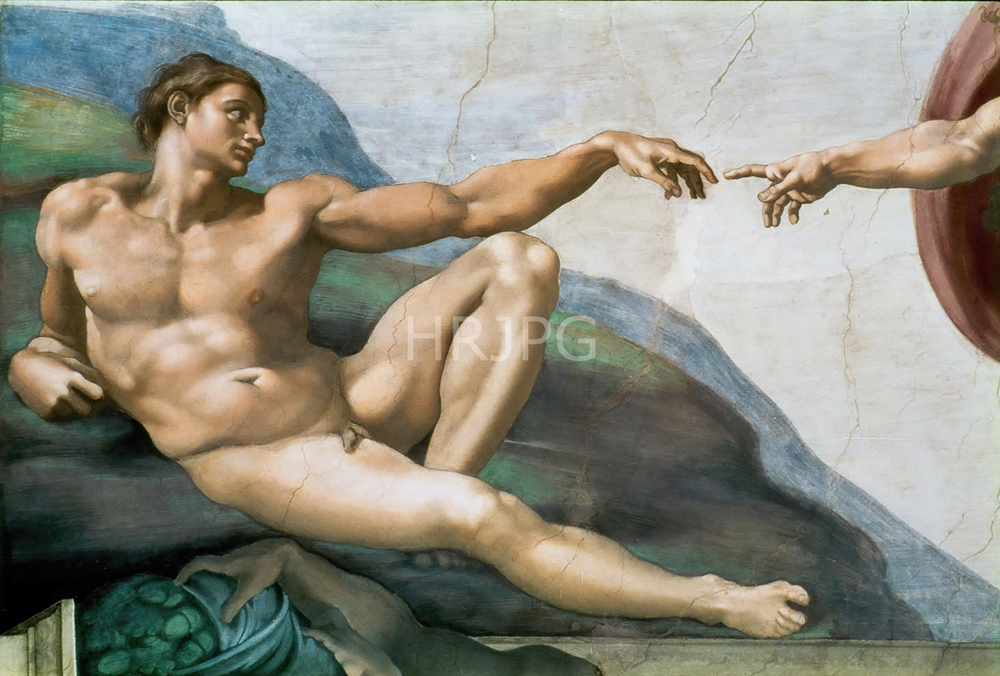
The reclining figure of Adam on the Sistine Chapel ceiling is perhaps the most famous and influential nude in Western art history. Michelangelo depicts him in a state of languid, potential energy, his muscular yet relaxed body resting on the earth as he waits for the spark of life from God the Father. This figure reflects the ideal of physical beauty and anatomical perfection that defined the High Renaissance, illustrating Michelangelo’s belief that the human form is the highest expression of the divine spirit within the material world. The pose is a masterclass in the use of "figura serpentinata" and foreshortening, creating a sense of three-dimensional volume and rhythmic harmony that unifies the figure with the surrounding landscape.
The technical execution of Adam demonstrates Michelangelo’s unparalleled skill in the representation of the male nude. He utilize strong "chiaroscuro" to model the ripple of muscles and the structural integrity of the human frame, making the figure appear as a solid, permanent presence carved from light and color. The use of soft transitions and a vibrant, yet restrained, color palette gives the skin a luminous quality that is both noble and tangible. Every detail—from the tension in the neck to the delicate positioning of the hand—serves to convey the internal psychological state of awakening. This focus on the "motions of the mind" through anatomical pose set a new standard for Western painting, influencing generations of artists who sought to master the complexities of the human body as a site of spiritual expression.
Historically, the figure of Adam has been interpreted through numerous philosophical and theological lenses, including Neo-Platonism and Catholic orthodoxy. He represents the peak of God’s creation and the vessel through which the divine plan for humanity is enacted. Michelangelo’s revolutionary approach—showing a dynamic and potentially active Adam rather than a static icon—paved the way for the dramatic and emotional innovations of the Mannerist and Baroque eras. Technically, the fresco remains a masterclass in the application of the medium on a colossal scale. It stands as a testament to the unique genius of an artist who sought to capture the entire spectrum of human and divine experience in a singular, crystalline masterpiece, securing Adam’s place as an enduring symbol of human dignity and divine grace across the centuries.