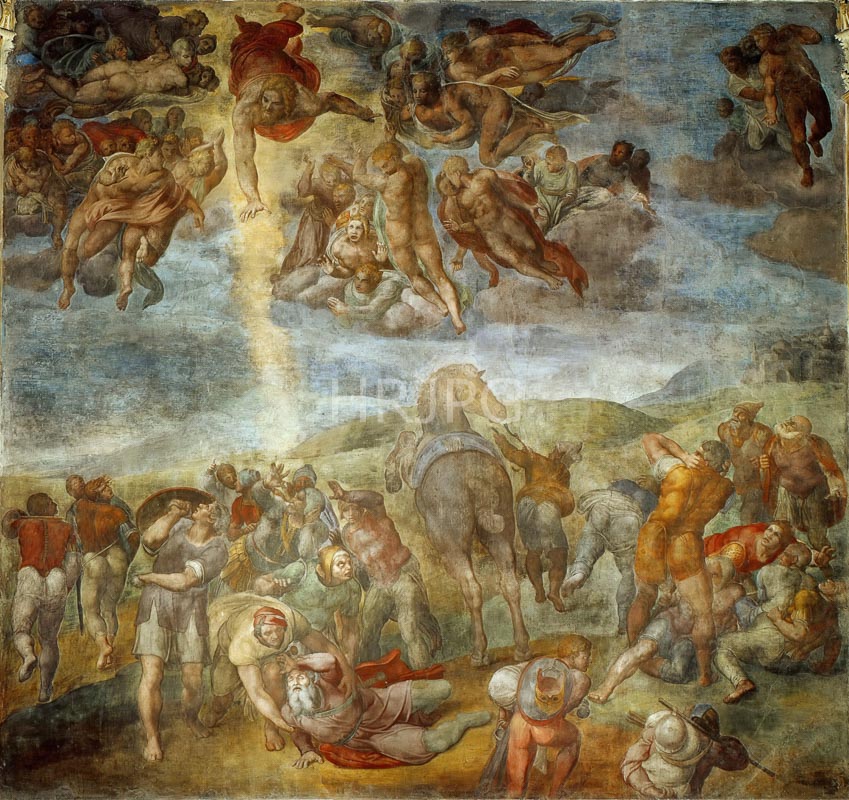
The Conversion of Saul is a monumental fresco in the Pauline Chapel of the Vatican, painted by Michelangelo during his final years. It depicts the miraculous transformation of Saul of Tarsus into Saint Paul, following his blinding vision of Christ on the road to Damascus. Michelangelo utilizes a chaotic, swirling composition and dramatic, focused lighting to emphasize the overwhelming power of divine intervention. The scene is centered on the fallen Saul, who is shown struck down by a blinding light from the heavens, his body contorted in a state of physical and spiritual shock. This work reflects the artists late-life interest in themes of divine grace, conversion, and the vulnerability of the soul in the face of the infinite.
The technical execution of the "Conversion" highlights Michelangelo’s late stylistic shift toward a more expressive, dynamic, and emotionally raw visual language. He utilize vigorous hatching and a somber color palette to create a sense of atmospheric weight and psychological tension. The figure of Christ, descending from the clouds, is rendered with an extraordinary energy, while the surrounding crowd of soldiers and horses reacts with a mix of terror and awe. Michelangelo’s use of extreme foreshortening and "figura serpentinata" creates a powerful sense of three-dimensional volume and rhythmic motion that unifies the diverse elements of the scene. This focus on the "motions of the mind" through anatomical contortion became a primary influence on the development of Baroque art, prioritizing spiritual intensity over classical harmony.
Historically, the "Conversion of Saul" was commissioned by Pope Paul III and serves as a vital document of the Counter-Reformation’s focus on the power of the Church and the transformative nature of faith. Michelangelo’s interpretation avoids traditional static iconography, instead showing the event as a visceral and life-changing trauma. Technically, the fresco demonstrates the artists supreme mastery of the medium even in his late seventies. It remains a masterpiece of visionary art, standing as an enduring testament to the unique genius of a master who captured the deepest anxieties of the soul and the majesty of the divine plan. By studying this work, scholars gain insight into the restless and spiritual spirit of an artist who never ceased to challenge the boundaries of Western art, securing its place as an iconic image of sacred history.