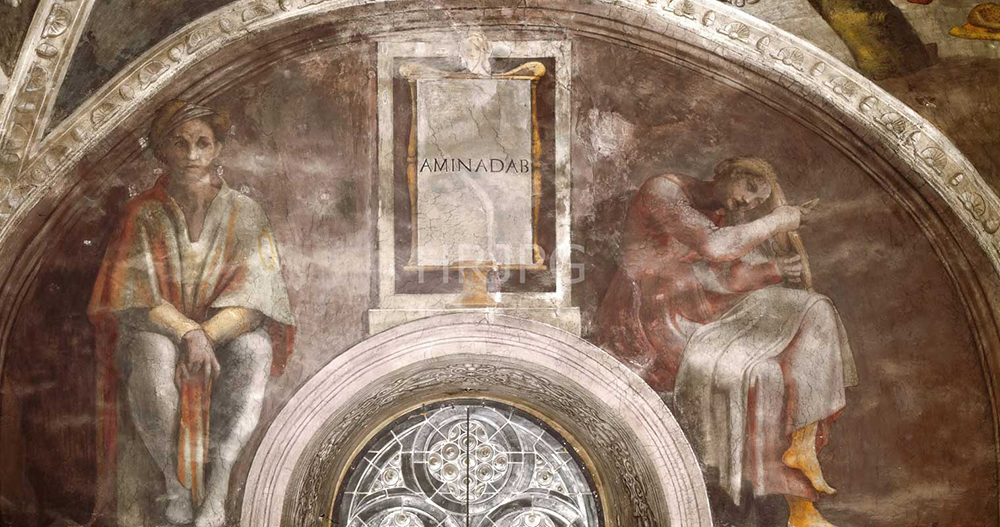
The lunette depicting Aminadab is part of the extensive genealogical cycle of the Ancestors of Christ on the Sistine Chapel ceiling. Michelangelo focuses on the human element of Christ’s lineage, using simplified forms and muted colors to contrast with the heroic energy of the central panels. Aminadab is shown seated in a quiet, contemplative pose within a shallow architectural niche, representing one of the generations of the House of Judah waiting for the fulfillment of the divine promise. This series is characterized by its heavy, earthbound quality and its focus on the quiet dignity of human history and familial continuity across the centuries. It provides a profound meditation on the generational wait for the Messiah.
The technical execution of Aminadab highlights Michelangelo’s incredible speed and confidence as a fresco painter during the final phase of the ceiling project. These lunettes were executed with remarkable efficiency, featuring bold brushstrokes and minimal underdrawing. The figure of Aminadab is modeled with a sculptural solidity that reflects Michelangelo’s identity as a stonecarver, yet his pose conveys a deep sense of internal psychological stillness. The use of soft shadows and a restrained light source creates a mood of solemnity and dignity, highlighting the humanity of these ancestral figures who bridge the gap between the Old Covenant and the birth of Christ. Michelangelo prioritize clear silhouettes to ensure legibility from the chapel floor, a hallmark of his late-ceiling style.
Historically, the "Ancestors of Christ" series reinforces the theological program of the Sistine Chapel by demonstrating that the path to salvation is rooted in human history and familial succession. It reminds the viewer that divine intervention acts through the continuity of the generations. Michelangelo’s interpretation of Aminadab avoids the heroic dynamism of the Prophets, instead providing a more personal and domestic vision of sacred history. Technically, the work showcases the artists ability to organize a massive decorative program while maintaining the individual psychological depth of its characters. It remains a vital subject of study for its innovative approach to monumental figure grouping and its profound exploration of the quiet, unheroic aspects of the divine plan, standing as a testament to Michelangelo’s enduring genius.