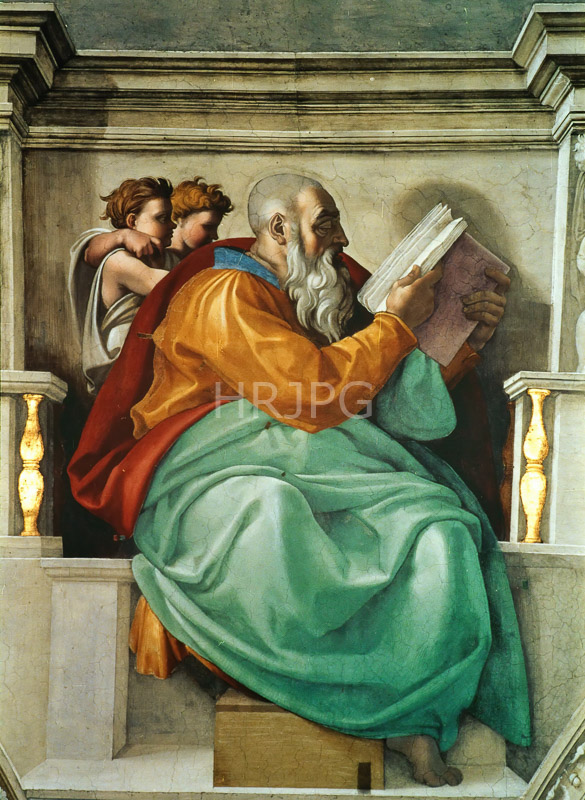
The Prophet Zacharias is the first figure among the seven Hebrew prophets depicted by Michelangelo on the Sistine Chapel ceiling, positioned directly above the main entrance. Zacharias is shown as a monumental and aged figure, intently leafing through a large book of prophecy. This pose represents the intellectual focus and the weight of scriptural wisdom that anchors the beginning of the ceiling’s vast and complex narrative sequence. Michelangelo renders him with heavy, rhythmic drapery in tones of blue, yellow, and green, emphasizing his physical volume and sculptural weight. Zacharias symbolizes the study of divine truth and the link between the ancient world and the coming of the Savior as conceived in the Renaissance.
The technical execution of the figure showcases Michelangelo’s early style on the ceiling, characterized by a balance between anatomical rigor and monumental dignity. He utilize strong "chiaroscuro" to model the features and the folds of the garments, giving the prophet a powerful sense of three-dimensional presence. The face of Zacharias is rendered with a noble and scholarly expression, his focused gaze suggesting a deep immersion in sacred texts. The two youthful cherubs behind him provide a sense of narrative depth and divine inspiration, their smaller scale highlighting the colossal proportions of the prophet within the architectural niche. Michelangelo uses the surrounding framework to anchor the figure, making him appear as a permanent, immovable pillar of biblical wisdom within the decorative program of the chapel.
Historically, Zacharias’s placement above the entrance reinforces the theme of the prophetic preparation for the events depicted on the ceiling. His prophecy concerning the coming of the Messiah links the Old Testament to the sacred history of the Church. Michelangelo’s interpretation avoids traditional static iconography, introducing a sense of psychological depth and physical energy that revolutionized the representation of prophets. This work has been admired for centuries for its perfect proportions and its unique synthesis of physical power and intellectual dignity. It remains a cornerstone of the Sistine decorative program, standing as an enduring testament to Michelangelo’s unique genius and his ability to translate the deepest mysteries of faith into a visceral visual language of peak elegance. Zacharias serves as a hauntingly beautiful reminder of the power of the prophetic spirit at the dawn of the modern era.