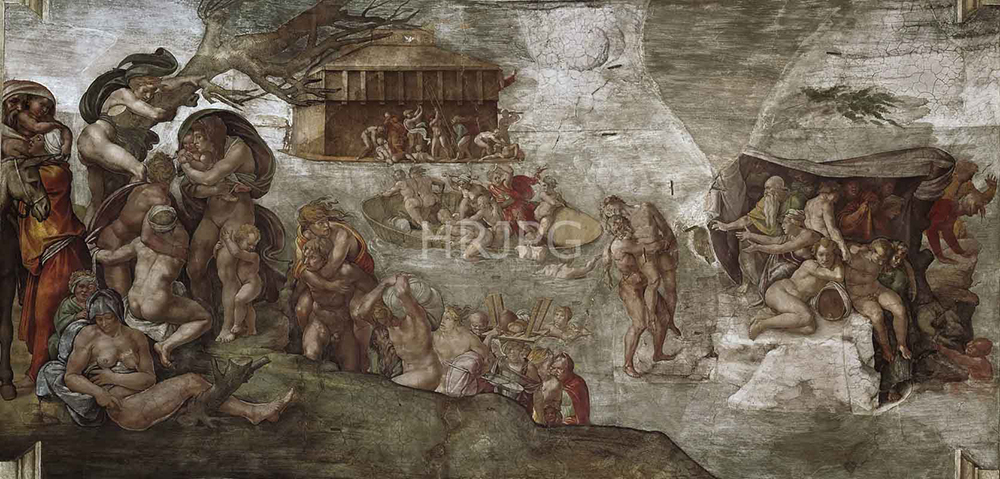
The Deluge is one of the most complex and emotionally harrowing large-scale compositions on the Sistine Chapel ceiling. This narrative fresco depicts the biblical Great Flood as described in the Book of Genesis, focusing not on the majestic ark in the distance, but on the raw human struggle for survival in the foreground. Michelangelo utilizes multiple groups of figures to illustrate the varied psychological reactions to divine judgment: from panic and aggression to profound grief and resignation. The composition is a departure from his later, more simplified scenes, featuring over sixty figures caught in a swirling vortex of rising water and rocky outcrops. This work stands as a testament to the artists early stylistic period on the ceiling, where he sought to balance monumental anatomy with dense, multi-layered storytelling.
The central drama is divided into several poignant episodes. On the left, a long line of refugees climbs a hill, carrying their most precious belongings and infants, symbolizing the desperate hope of humanity. In the center, a small, overloaded boat threatens to capsize, highlighting the frantic and often violent nature of self-preservation during a catastrophe. To the right, a temporary shelter is filled with figures who have sought refuge, showing moments of paternal care and communal despair. Michelangelo emphasizes the physical weight and muscularity of the bodies, yet through their contorted poses and expressive faces, he communicates a deeper existential dread. The ARK, floating in the misty background, represents the only hope for salvation, appearing as a closed, unreachable vessel that underscores the tragic isolation of those left behind.
Technically, the "Deluge" showcases Michelangelos mastery of the human form in diverse and challenging poses. The use of chiaroscuro is powerful, projecting the muscularity of the figures forward while the receding landscapes fade into a hazy, atmospheric perspective. Despite the damage caused by a powder magazine explosion in 1797 and subsequent environmental deterioration, the frescoes emotional power remains undiminished. It provides a profound meditation on human vulnerability, the inevitability of divine justice, and the endurance of the spirit even in the face of total destruction. This masterpiece revolutionized the representation of epic narratives, setting a standard for dramatic complexity that would influence Western art for centuries.