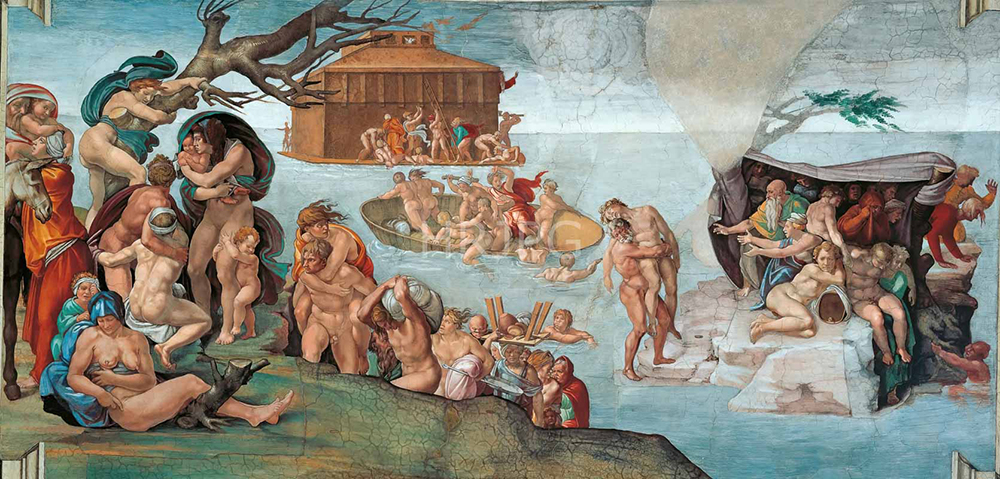
This specific detail from the Deluge fresco focuses on the frantic efforts of humanity to escape the rising waters, capturing a moment of extreme physical and psychological tension. Michelangelo isolates a group of figures clinging to a rocky outcrop, their bodies intertwined in a chaotic struggle for space and safety. The detail highlights the artists unparalleled skill in depicting the ripple of muscles and the tension of limbs under stress. Each figure possesses a unique identity and emotional state, from the father carrying his limp son to the individuals shielding themselves from the relentless rain. This focus on individual human drama within a global catastrophe is a hallmark of High Renaissance humanism, where the human experience is placed at the center of sacred history.
The modeling of the flesh in this detail is particularly noteworthy. Michelangelo uses a sophisticated technique of hatching and smooth transitions to create a sense of three-dimensional volume that feels almost sculptural. The play of light across the damp skin and the heavy, saturated drapery adds to the tactile realism of the scene. Through these contorted anatomy and expressive gestures, the artist conveys a sense of panic and despair that transcends the biblical narrative, touching on universal themes of survival and loss. The background, though simplified in this detail, suggests the vastness of the destructive environment, making the smallness and vulnerability of the human figures even more apparent.
Historically, this section of the fresco has been studied as a masterclass in compositional grouping. Michelangelo manages to create a rhythmic flow between the figures, leading the viewers eye through a series of overlapping forms that emphasize the communal nature of the tragedy. Despite the aging of the plaster and the loss of some fine detail over five centuries, the power of the drawing and the intensity of the expressions continue to resonate. It stands as a reminder of Michelangelos ability to imbue even the smallest fragment of a larger work with monumental dignity and profound emotional truth, demonstrating why his influence on the representation of the human condition remains so enduring.