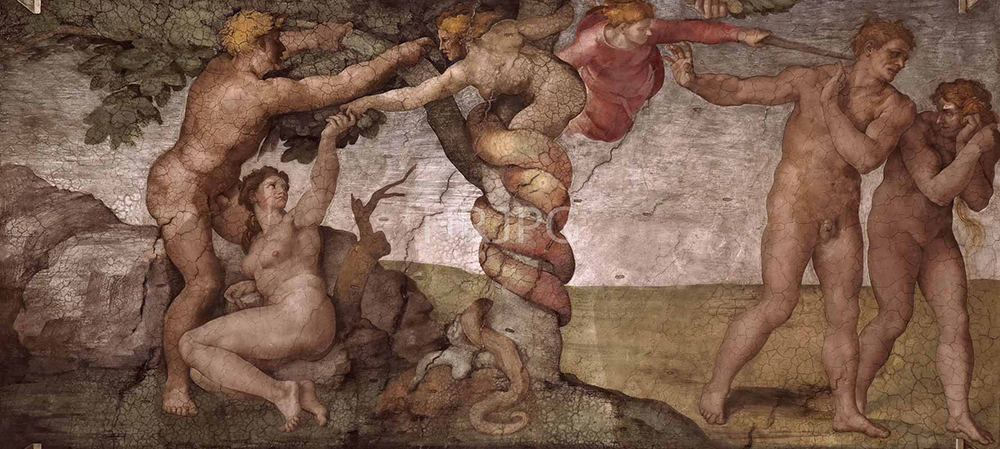
The Fall and the Expulsion from Paradise is a pivotal narrative fresco on the Sistine Chapel ceiling, combining two distinct moments from the Book of Genesis into a singular, balanced composition. Michelangelo utilizes the central Tree of Knowledge, entwined by a human-headed serpent, to divide the scene. On the left, Adam and Eve are shown in their youthful, idealized beauty, succumbing to the temptation of the forbidden fruit. On the right, the same couple appears withered, aged by shame and grief, as they are forcibly driven out of Eden by a vengeful angel with a sword. This juxtaposition serves as a powerful visual metaphor for the loss of innocence and the consequences of disobedience, rendered with the dramatic intensity and anatomical rigor that defined the High Renaissance.
The figures in the temptation scene are modeled with a soft, radiant light, emphasizing their physical perfection and the lushness of the original Paradise. In contrast, the expelled figures are shadowed and contorted, their poses reflecting an internal psychological burden. Eve, in particular, undergoes a startling transformation from a figure of grace to one of abject sorrow. Michelangelo’s use of "sfumato" and "chiaroscuro" creates a powerful sense of three-dimensional volume, making the characters appear to emerge from the architectural frame of the ceiling. The landscape also changes across the composition, shifting from the fertile ground of Eden to the barren, rocky wilderness of the outside world, utilizing aerial perspective to suggest a vast and uncertain future for humanity.
Technically, this fresco is a masterpiece of storytelling and compositional harmony. Michelangelo avoids unnecessary decorative elements, focusing entirely on the human form as the primary vehicle for the narrative. The interaction between the figures and the serpent creates a dynamic, spiraling motion that unifies the scene. Over the centuries, this work has become one of the most iconic images in Western culture, symbolizing the foundational myth of the human condition. As part of the Genesis cycle, it illustrates Michelangelos profound ability to translate complex theological concepts into a visceral and emotionally resonant visual language. It remains an essential subject of study for its innovative approach to narrative sequence and its uncompromising focus on the dignity and frailty of mankind.