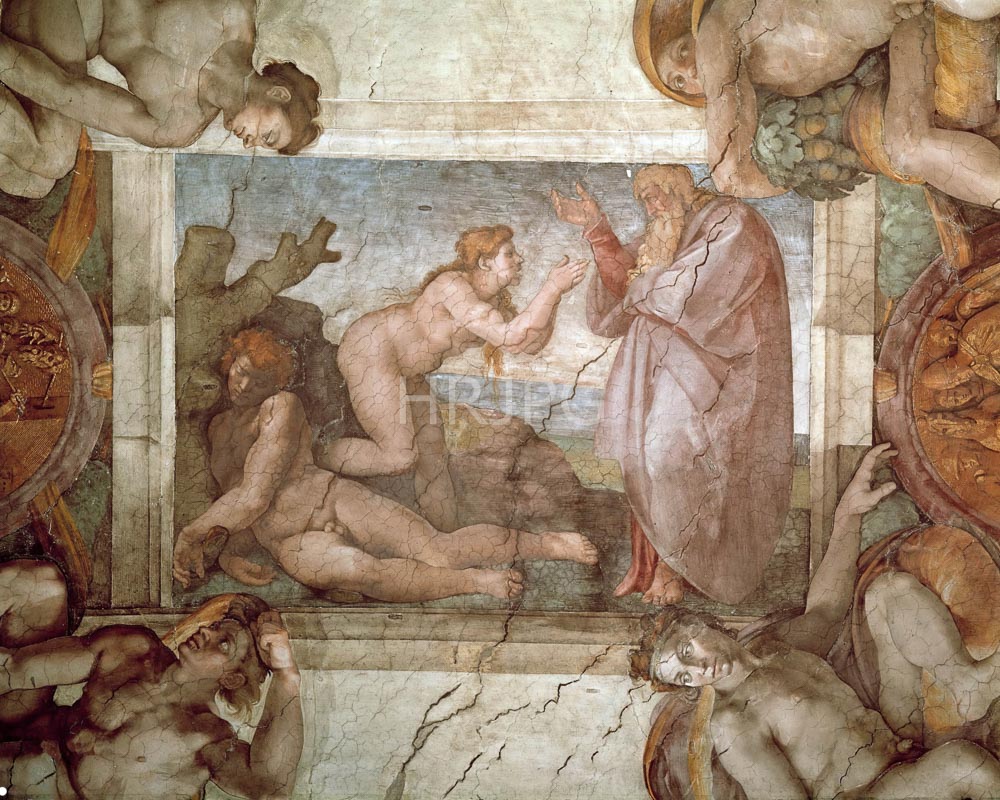
The Creation of Eve occupies the central panel of the Sistine Chapel ceiling, serving as a crucial narrative and symbolic bridge between the creation of man and the fall of humanity. In this scene, Michelangelo depicts God the Father as a monumental, dignified figure standing on a rocky ground, gesturing for Eve to emerge from the side of the sleeping Adam. Unlike the dynamic and explosive energy of the other creation panels, this work is characterized by a profound sense of stillness and solemn grace. Eve is shown with hands joined in a gesture of humble prayer and awakening, her form radiating a vulnerable yet sacred potential as she responds to the divine call for her inception into the world.
The composition is remarkably direct and balanced, focusing entirely on the rhythmic connection between the creator and the first woman. Michelangelo uses a subdued color palette of earthy browns, greys, and muted blues to emphasize the primeval and sacred atmosphere of the event. The figure of Adam, reclining in a deep sleep, is modeled with a sculptural solidity that reflects Michelangelos background as a carver of stone. The use of "sfumato" allows for soft transitions between the figures and the simplified landscape, creating a sense of unified atmosphere and divine order. This central placement on the ceiling highlights the importance of the female presence in the sacred history of mankind, representing the origin of human companionship and the birth of the Church.
Technically, the "Creation of Eve" demonstrates Michelangelos ability to communicate profound theological concepts through subtle gestures and anatomical poses. The physical proximity of God to Eve suggests a close and nurturing relationship at the moment of birth, contrasting with the epic distance seen in the "Creation of Adam." Historically, this panel was painted during the second phase of the project, showing a transition toward larger, more simplified figures that are more legible from the floor of the chapel. It remains a masterpiece of narrative clarity and emotional intimacy, standing as a testament to the artists unique vision of the divine act of creation and his ability to imbue traditional biblical stories with a modern sense of psychological depth and monumental dignity.