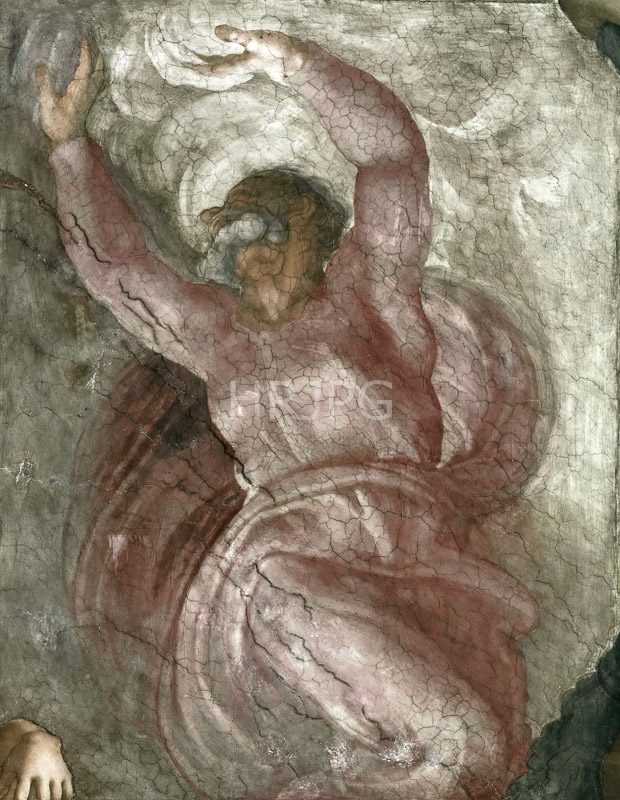
Separation of Light from Darkness is the first narrative panel on the Sistine Chapel ceiling, representing the initial act of creation as described in the Book of Genesis. Michelangelo portrays God the Father as a monumental figure twisting in a complex, spiraling pose (a "figura serpentinata") to divide the primordial light from the void. This scene captures the very dawn of time, characterized by an explosive energy and a sense of divine struggle as order is brought to chaos. The Creator is shown from a radical, foreshortened perspective, his hands reaching upward into the swirling clouds that symbolize the birth of the universe. This panel is the smallest of the nine central scenes, yet it possesses a monumental power that sets the intellectual and aesthetic tone for the entire ceiling.
The technical execution of this fresco is a masterclass in Michelangelos late-first-period style. He employs a simplified background to ensure the focus remains on the dynamic motion and the physical volume of the divine figure. The use of "chiaroscuro" is intense, with deep shadows and brilliant highlights defining the muscular ripples of the torso and the heavy folds of the robes. Michelangelo’s ability to communicate the abstract concept of creation through the medium of the human body reflects his belief that the human form is the most perfect expression of divine spirit. The lighting appears to emerge from within the figure itself, illuminating the scene and symbolizing the light of divine truth breaking through the darkness of the void. This treatment of light and shadow unifies the composition and imbues it with a sacred, ethereal glow.
Historically, "Separation of Light from Darkness" is significant for its placement directly above the altar, where the priest would celebrate the Mass. It serves as a visual metaphor for the light of Christ entering the world, linking the Old Testament creation to the New Testament salvation. Michelangelo’s revolutionary approach to the Creator—depicted as a swirling vortex of energy rather than a static icon—paved the way for the dramatic and emotional innovations of the Mannerist and Baroque eras. This masterpiece stands as a testament to the artists status as a visionary who could bridge different European aesthetic traditions to create a unique and enduring vision of divine grace and cosmic order. It remains one of the most intellectually profound and aesthetically daring works of the High Renaissance, capturing the deepest mysteries of faith through a visual language of peak elegance and technical perfection.