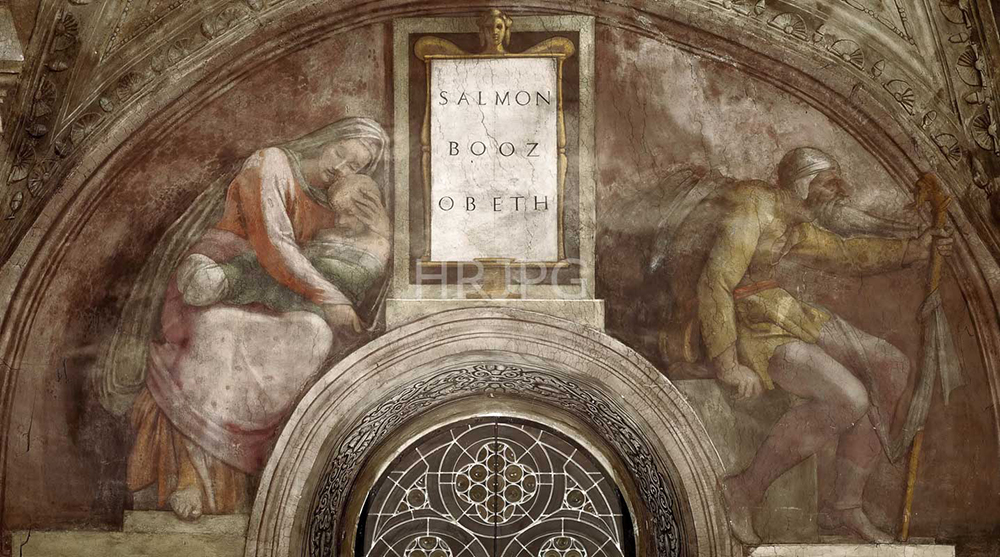
The fresco depicting Salmon, Boaz, and Obed is located in one of the lunettes above the windows of the Sistine Chapel, forming part of the extensive genealogical cycle of the Ancestors of Christ. In this composition, Michelangelo shifts his focus from the heroic, divine energy of the central ceiling panels to a more quiet, human, and domestic atmosphere. The figures are seated in a shallow, architectural niche, representing the long generations of the lineage of Judah waiting for the fulfillment of the Messianic promise. This series is characterized by its muted color palette and a sense of heavy, contemplative stillness, reflecting the earthly weight of human history and the patient endurance of faith across centuries.
Salmon is shown on the left, positioned in profile and deeply immersed in thought, his form anchored by voluminous drapery that emphasizes his physical and spiritual presence. To the right, the figure of a woman—likely the mother of Obed—is shown tending to her child, creating a rare moment of maternal intimacy within the chapel’s grand decorative scheme. Michelangelo utilizes a simplified, yet monumental style for these figures, prioritizing clear silhouettes and broad planes of color to ensure legibility from the floor below. The architectural tablet in the center, inscribed with their names, serves as a formal anchor that links the biblical past to the liturgical present of the chapel. The use of soft shadows and a restrained light source creates a mood of solemn dignity, highlighting the humanity of these ancestral figures who bridge the gap between the Old Covenant and the birth of Christ.
Technically, the Ancestors of Christ series demonstrates Michelangelo’s incredible speed and confidence as a fresco painter. Unlike the central panels, which often required numerous "giornate" (days of work), these lunettes were executed with remarkable efficiency, featuring bold brushstrokes and minimal underdrawing. The artist explores the psychological interiority of his subjects, portraying them as individuals burdened by time and expectation. This work is significant for its role in the overall theological program of the Sistine Chapel, reminding the viewer that the path to salvation is rooted in human history and familial continuity. It remains a vital subject of study for its innovative approach to monumental figure grouping and its profound exploration of the quiet, unheroic aspects of the divine plan.