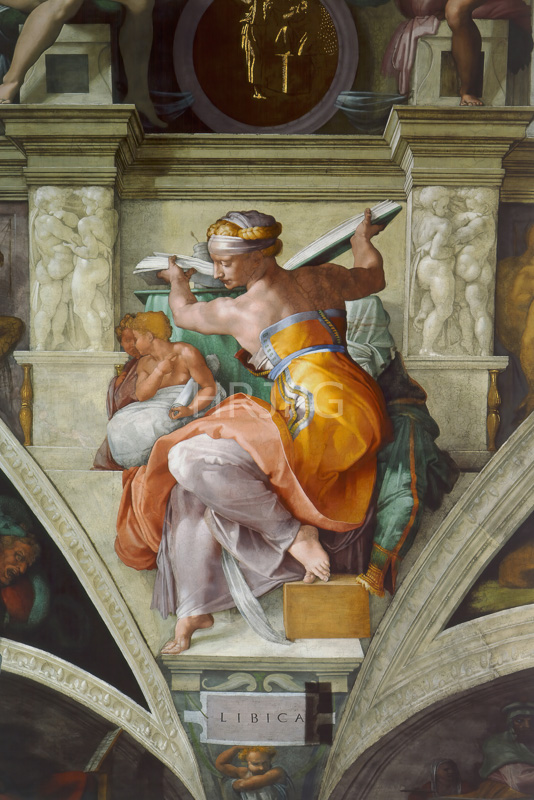
The Libyan Sibyl is widely celebrated as one of the most magnificent and technically perfect figures on the Sistine Chapel ceiling. Representing the ancient prophetess from Africa, she is depicted in a moment of supreme athletic grace, twisting her body to place a large book of prophecy onto a pedestal behind her. Michelangelo utilizes the "figura serpentinata" to its fullest potential here, creating a rhythmic and harmonious spiral that showcases his unrivaled mastery of human anatomy. The Sibyl’s form is both monumental and delicate, embodying the High Renaissance ideal of "terribilità" combined with peak aesthetic elegance. Her vibrant orange and yellow garments catch the light, making her one of the most luminous and eye-catching elements of the entire decorative program.
The modeling of the Sibyl’s back and shoulders is a masterclass in the representation of muscular structure under tension. Michelangelo used a male model for this study (as evidenced by his famous red chalk drawings) to achieve a sense of heroic power, yet he successfully translates this into a figure of divine feminine authority. Her focused expression and the complex positioning of her hands and feet suggest an intellectual and spiritual intensity that transcends the physical act of moving the book. The two youthful cherubs at her feet look up in admiration, providing a sense of scale and narrative context. Michelangelo’s use of "chiaroscuro" creates a powerful sense of three-dimensional volume, making the Sibyl appear as a living, breathing presence carved from light and color within the architectural framework of the ceiling.
Historically, the Libyan Sibyl represents the pagan world’s recognition of the coming Savior, serving as a prophetic bridge between antiquity and the Christian era. Her placement near the Separation of Light from Darkness emphasizes her role as a witness to the divine order of the universe. This work has inspired generations of artists and remains a cornerstone of Western art history for its perfect balance of strength and grace. As part of the final phase of the ceiling project, it demonstrates Michelangelo’s full maturity as a painter and his ability to infuse stone-like solidity into the fluid medium of fresco. It stands as an enduring testament to the artist’s unique creative vision and his belief that the human body is the ultimate vessel for expressing the majesty of the divine spirit.