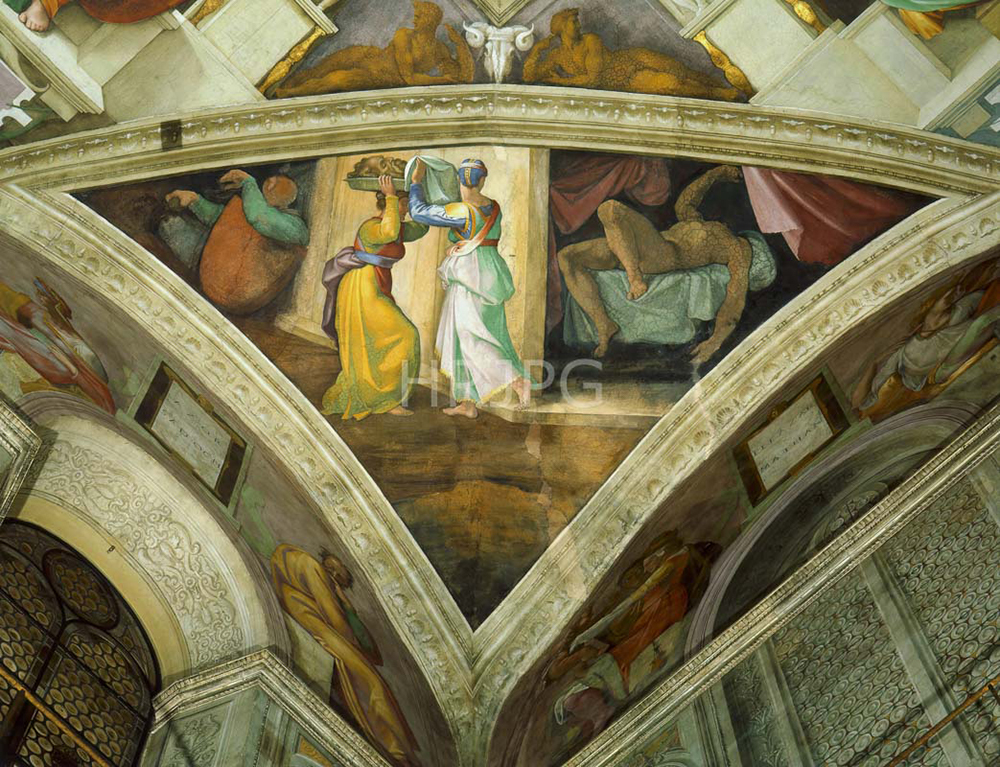
The corner spandrel depicting Judith and Holofernes is a powerful and unsettling narrative fresco that illustrates the triumph of faith over tyranny. Michelangelo captures the immediate aftermath of the Jewish heroine Judith beheading the Assyrian general Holofernes to save her people. The scene is characterized by a sense of stealth and dramatic tension, as Judith and her maidservant are shown placing the severed head into a basket. The composition is expertly adapted to the challenging triangular space of the ceiling corner, utilizing deep shadows and a compact arrangement of figures to emphasize the gravity and secrecy of the act. This work reflects Michelangelo’s ability to combine gruesome reality with a sense of heroic virtue, a theme that resonates throughout the entire Sistine project.
The figure of Holofernes is shown as a massive, muscular torso reclining on a bed in the background, his defeat serving as a stark reminder of the vulnerability of brute physical power against divine will. Judith, positioned in the center, is modeled with a quiet resolve; her face is turned away from her victim, suggesting a mix of duty and internal struggle. Michelangelo uses a somber color palette, with the deep reds and earthy tones of the garments anchored by the dark, claustrophobic atmosphere of the tent. The lighting is focused and dramatic, highlighting the textures of the fabrics and the cold reality of the decapitated head. This use of "chiaroscuro" projects the figures forward, making the viewer a silent witness to the historical turning point.
Historically, the story of Judith was a popular subject in Renaissance Florence, symbolizing civic liberty and the protection of the weak against oppressors. In the context of the Sistine Chapel, it serves a theological purpose by prefiguring the victory of the Church over its enemies. Michelangelo’s interpretation avoids the overt violence found in later Baroque versions, focusing instead on the psychological weight and the moral clarity of the protagonists. Technically, the fresco demonstrates the artist’s early mastery of complex group compositions and his skill in creating narrative depth within restricted architectural boundaries. It remains a masterpiece of dramatic economy and profound human relevance, standing as a testament to Michelangelo’s unique vision of the heroic individual in sacred history.