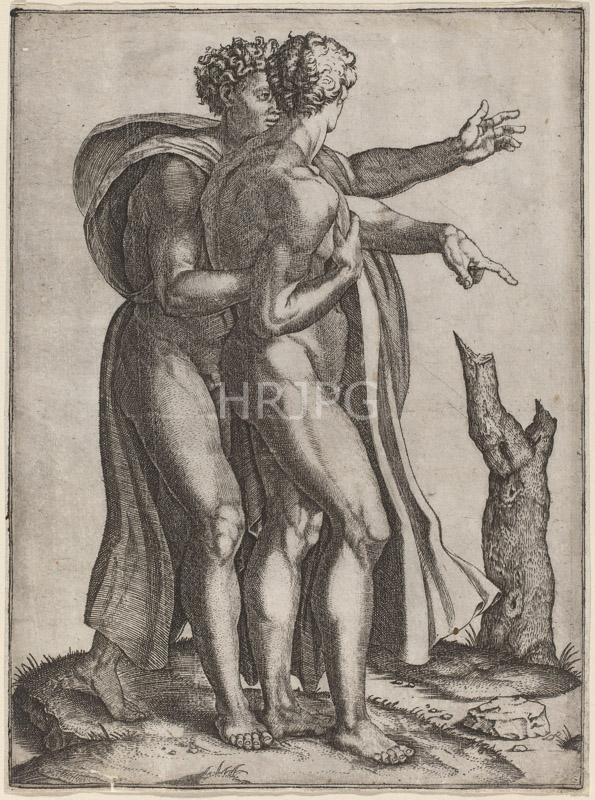
This engraving by Marcantonio Raimondi, titled "The Two Sons of Noah," is a fascinating example of how Michelangelo’s groundbreaking designs were disseminated and studied throughout 16th-century Europe. The composition is based on a specific detail or a lost study related to the background figures of the Sistine Chapel ceiling narratives. It depicts two muscular nude men in a state of active discussion, their poses characterized by a sense of rhythmic harmony and physical volume that is quintessentially "Leonardesque" and "Michelangelesque." Raimondi, the most celebrated engraver of the High Renaissance, translates Michelangelo’s sculptural style into the graphic medium of fine lines and cross-hatching, preserving the monumental dignity of the original vision for a wider audience of scholars and collectors.
The technical execution of the print highlights the importance of the human nude as the primary subject of artistic inquiry. The figures are modeled with a sophisticated use of tonal contrast, where the light appears to catch the peaks of the muscles, creating a powerful three-dimensional effect. The interaction between the two men—suggested by their focused gazes and expressive hand gestures—conveys a sense of intellectual and psychological depth. This focus on the "motions of the mind" through anatomical pose was a hallmark of the Vinci and Buonarroti workshops. The inclusion of a simplified landscape background with a withered tree trunk adds a touch of narrative context and spatial depth, grounding the heroic figures within a habitable environment that reflects the era’s fascination with the "imitation of nature."
Historically, Raimondi’s prints after Michelangelo played a crucial role in standardizing the High Renaissance figure style across Italy and Northern Europe. They served as essential models for generations of artists who sought to master the complexities of the human form in various challenging poses. This specific engraving reflects the intellectual and aesthetic climate of the 1510s, where the pursuit of anatomical idealism was inextricably linked to the revival of classical antiquity. As a document of Michelangelo’s influence, "The Two Sons of Noah" remains a vital piece of the Renaissance puzzle, showcasing the collaborative spirit of the era and the enduring power of the master’s creative genius to transform a secondary narrative element into a profound exploration of human existence and physical grace.