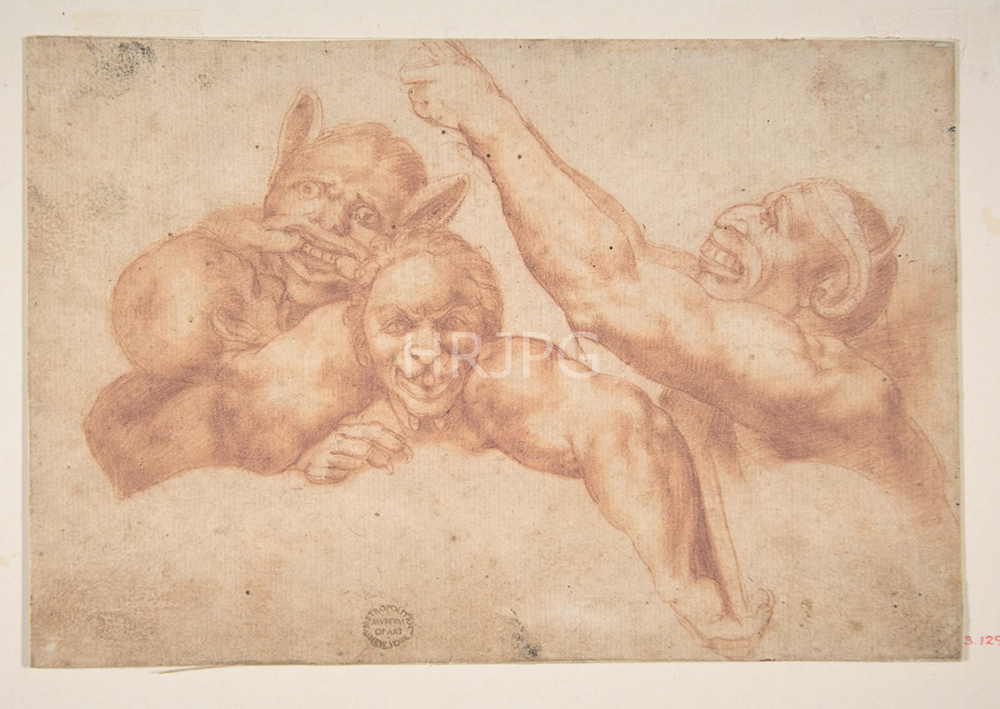
This red chalk study focuses on a specific group of damned souls for the lower right section of the "Last Judgment" fresco on the altar wall of the Sistine Chapel. Michelangelo utilizes the medium to its fullest expressive potential, exploring the extreme anatomical contortion and psychological angst of figures reacting to their eternal fate. The drawing is a masterclass in representing the human body as a vessel for intense spiritual suffering, with muscles rippling and limbs intertwined in a chaotic struggle against invisible demonic forces. Unlike the idealized figures of the ceiling, these studies from the masters later years show a departure toward a more elongated, expressive, and emotionally raw style that would define the Mannerist era.
The use of red chalk allows Michelangelo to achieve a remarkable sense of three-dimensional volume and lifelike skin texture through dense hatching and subtle rubbing. He focuses on the tension of the neck muscles and the desperate gestures of the hands, conveying a profound sense of existential horror. Each figure in the group possesses a unique emotional identity, from those covering their faces in shame to those crying out in terror. This focus on individual human drama within the grand, cosmic event of the Judgment is a hallmark of Michelangelo’s late humanism. The spatial organization of the figures, with their bodies overlapping and twisting in a complex "figura serpentinata," creates a sense of rhythmic movement that leads the viewer’s eye through the psychological depths of the sacred narrative.
Historically, these preparatory studies are critical for understanding the immense intellectual and physical effort required to realize the "Last Judgment." They reveal Michelangelo’s restless creative process and his uncompromising search for the perfect anatomical expression of spiritual truth. By isolating these figures, scholars gain insight into how the artist transformed his scientific studies of the human body into a visceral visual language of faith and judgment. Now held in prestigious collections like the Teylers Museum or the British Museum, this study remains a vital object of study for its technical brilliance and its profound human relevance. It stands as a hauntingly beautiful reminder of the power of the drawing to capture the deepest anxieties of the soul, securing Michelangelo’s status as the supreme master of the human condition in art.