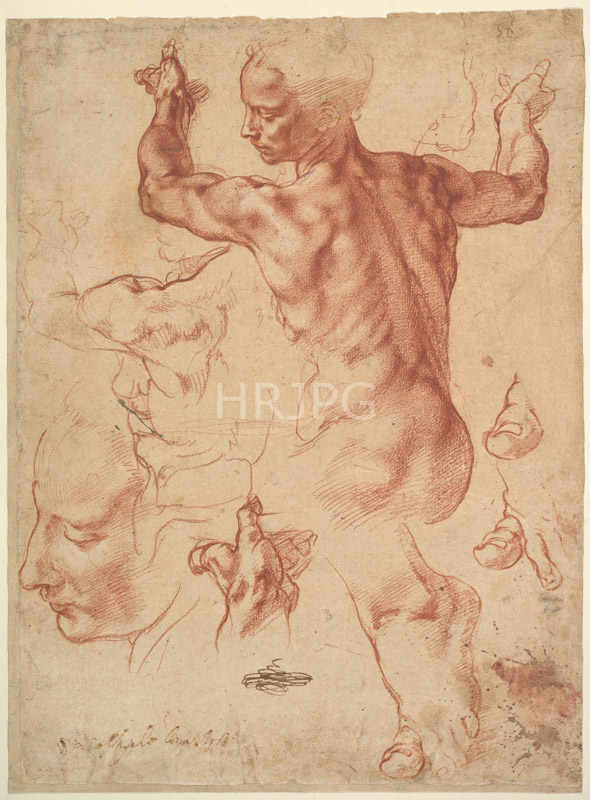
This celebrated red chalk drawing is one of Michelangelo’s most famous and admired works on paper, serving as the primary preparatory study for the "Libyan Sibyl" on the Sistine Chapel ceiling. Michelangelo utilize a male model to conduct this rigorous anatomical investigation, a common practice of the time to achieve a sense of heroic muscularity and structural clarity. The drawing focuses on the powerful torso and the complex twisting motion of the figure (the "figura serpentinata"), showcasing his unrivaled mastery of human anatomy. Every muscle and tendon is rendered with microscopic precision through delicate hatching and rubbing, creating a sense of three-dimensional volume and lifelike skin texture that rivals the solidity of stone.
The study is also famous for the multiple detail sketches surrounding the central figure, particularly the meticulously rendered "big toe" and the positioning of the hands. Michelangelo’s focus on these seemingly small details reveals his profound understanding of human physiognomy and how every part of the body contributes to the overall narrative of divine prophecy. The Sibyl’s pose, reaching back to put down her book of prophecy, is a tour de force of foreshortening and rhythmic harmony. This drawing provides a masterclass in the artists creative process, showing the transition from a scientific anatomical study to a figure of monumental grace and spiritual authority. The soft luminosity of the red chalk imbues the skin with a living quality, making the prophetess appear as a tangible, breathing presence in the sacred space of the chapel.
Historically, "Studies for the Libyan Sibyl" has been a cornerstone of Western art education, admired for its perfect proportions and its compromise between physical strength and peak aesthetic elegance. Now a treasure of the Metropolitan Museum of Art in New York, it remains a vital object of study for artists and scholars alike. It stands as a testament to Michelangelo’s belief that the human form is the highest expression of the divine spirit. It serves as a hauntingly beautiful reminder of the immense intellectual effort and physical discipline required to create a masterpiece that would revolutionize Western art, securing Michelangelo’s status as the "Divine" master who captured the entire spectrum of human and divine experience across the cities of Europe.