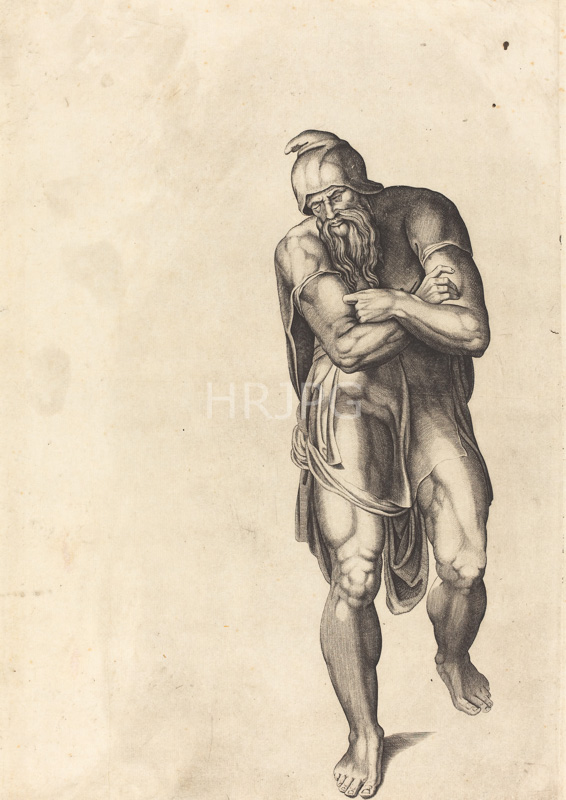
This high-quality engraving by the French printmaker Nicolas Beatrizet depicts a standing man with crossed arms, traditionally identified as Joseph of Arimathea. The composition is based on a specific design by Michelangelo, likely a study related to his late work in the Pauline Chapel or the "Last Judgment." Beatrizet, working in Rome, was one of the most important figures in the dissemination of Michelangelo’s monumental style through the medium of prints. This work showcases the "terribilità" and the heroic muscularity that characterized the artists late figure types, emphasizing a sense of dramatic weight and psychological presence through fine cross-hatched lines and a sophisticated use of tonal contrast.
The figure stands in a stable, architectural pose, yet his crossed arms and focused expression convey a profound state of internal spiritual contemplation or mourning. Michelangelo’s sculptural approach is perfectly translated into the graphic medium, with the light catching the peaks of the muscles to create a powerful sense of three-dimensional volume. Joseph of Arimathea, a key figure in the narrative of the Entombment and Resurrection, is portrayed here with a noble dignity that reflects the religious anxieties of the Counter-Reformation period. The simplified background highlights the monumentality of the figure, focusing the viewer’s attention entirely on the physical and spiritual presence of the protagonist. This focus on the "motions of the mind" through anatomical pose was a hallmark of the Michelangelo circle.
Historically, Beatrizet’s prints played a crucial role in standardizing Michelangelo’s late style across Europe, reaching scholars and artists who could not visit the Vatican. This engraving reflects the intellectual and aesthetic climate of the 1540s, where the pursuit of anatomical idealism was inextricably linked to the defense of Catholic orthodoxy and the spiritual intensity of sacred history. Technically, the work is a masterpiece of graphic translation, showcasing the artists ability to capture the ephemeral qualities of faith through a rigorous and disciplined visual language. It remains a vital piece of the Renaissance reception history, demonstrating that Michelangelo’s vision of the heroic individual continued to speak across the centuries, providing a bridge between the sacred art of the 16th century and the wider world of European culture.