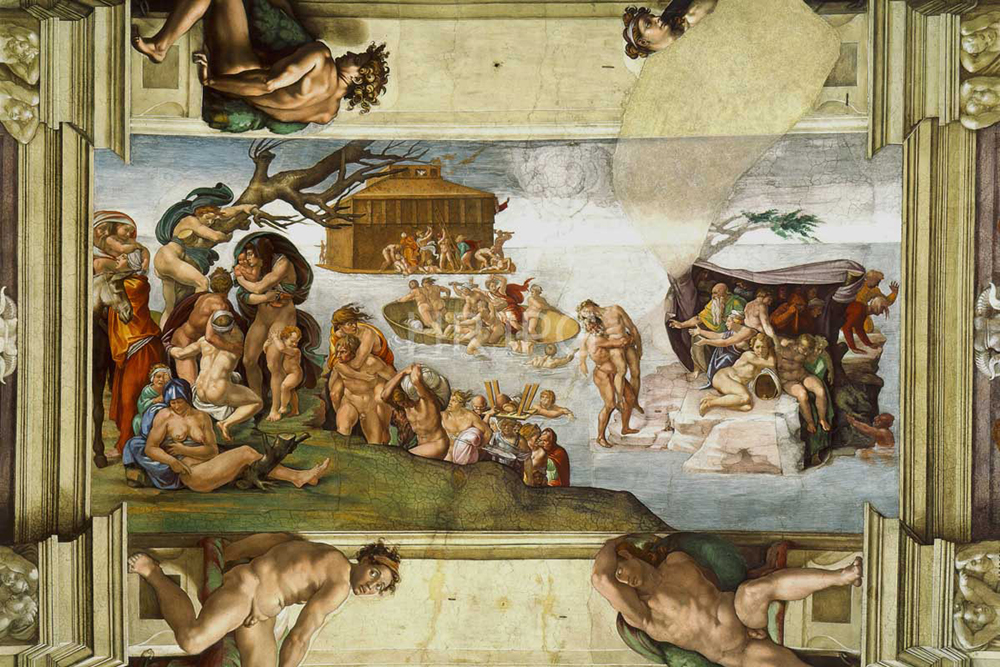
The Deluge is one of the earliest large-scale compositions Michelangelo painted on the Sistine Chapel ceiling. Depicting the biblical Great Flood, the fresco focuses on the raw human struggle for survival against divine wrath. Unlike his later, more simplified panels, this work is a complex multi-figure arrangement featuring over sixty characters in various states of desperation. The composition is divided into several narrative groups: refugees seeking safety on high ground, a crowded boat threatening to capsize, and a temporary shelter filled with mourning families. Michelangelo utilizes these groups to explore the full spectrum of human psychological reactions—from panic and violence to profound paternal care and communal grief.
Technically, the "Deluge" showcases the artist’s early stylistic phase on the ceiling, where he sought to balance monumental anatomy with dense, multi-layered storytelling. The figures are modeled with a vigorous sculptural solidity, their contorted poses and expressive gestures conveying a sense of visceral dread. The use of "chiaroscuro" is powerful, projecting the muscularity of the bodies forward while the receding landscape of rising water and misty horizons fades into atmospheric perspective. The Ark, visible in the background, represents the only hope for salvation, appearing as an unreachable vessel that underscores the tragic isolation of those left behind. Despite some environmental damage over the centuries, the fresco’s emotional power remains undiminished.
Historically, this panel provided Michelangelo with essential lessons in scale and legibility. Following its completion, he realized that the numerous small figures were difficult to see from the chapel floor, leading to the larger, more monumental figure types in his later panels. Nevertheless, the "Deluge" remains a masterpiece of narrative complexity and dramatic intensity. It provides a profound meditation on human vulnerability and the inevitability of divine judgment, setting a standard for epic storytelling that would influence Western art for generations. It stands as a testament to the artist’s unique ability to capture the terrifying majesty of sacred history through the medium of the heroic human form.