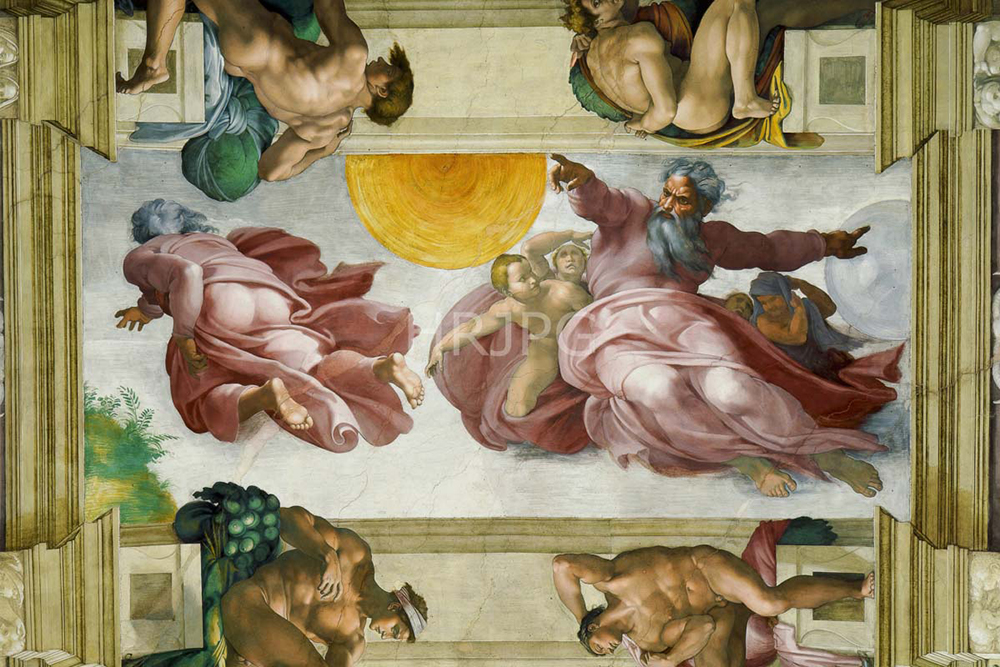
The Creation of the Sun Moon and Planets is one of the most dynamic and energetic panels on the Sistine Chapel ceiling. Michelangelo portrays God the Father twice in rapid succession within a single composition, creating the celestial bodies and then the vegetation on earth. This "simultaneous narrative" captures the raw, explosive energy of the divine act of creation. The Creator is shown as a monumental, foreshortened figure surging through the heavens, his hands reaching out in commanding gestures that emphasize his absolute authority over the cosmos. The rhythmic movement of his billowing robes and the twisting "figura serpentinata" pose exemplify the High Renaissance search for a perfect synthesis of power and grace.
The anatomical modeling of God is a tour de force of Michelangelesque "terribilità." Michelangelo uses strong "chiaroscuro" to define the physical volume and muscularity of the torso, making the divine figure appear to burst out of the architectural frame into the viewer’s space. The contrast between the brilliant, radiant light of the sun and the soft, cool glow of the moon creates a powerful visual drama that unifies the composition. Michelangelo’s use of spatial perspective is daring, showing God from behind as he moves toward the creation of the flora, emphasizing the swiftness of the divine will. This focus on the "motions of the mind" through frantic physical action was a revolutionary step in religious art, prioritizing the energy of the creative process over static iconography.
Historically, this panel represents the peak of Michelangelo’s visionary approach to the Genesis narrative. It reflects the intellectual climate of Rome during the papacy of Julius II, where the power of the Church was celebrated through grand, heroic artistic programs. Technically, the fresco demonstrates the artist’s supreme mastery of the medium, featuring bold brushstrokes and a vibrant color palette that underscores the cosmic scale of the event. It remains a masterpiece of dramatic storytelling and formal innovation, standing as a testament to Michelangelo’s unique ability to translate complex theological concepts into a visceral and enduring visual language that continues to inspire awe in viewers centuries later.