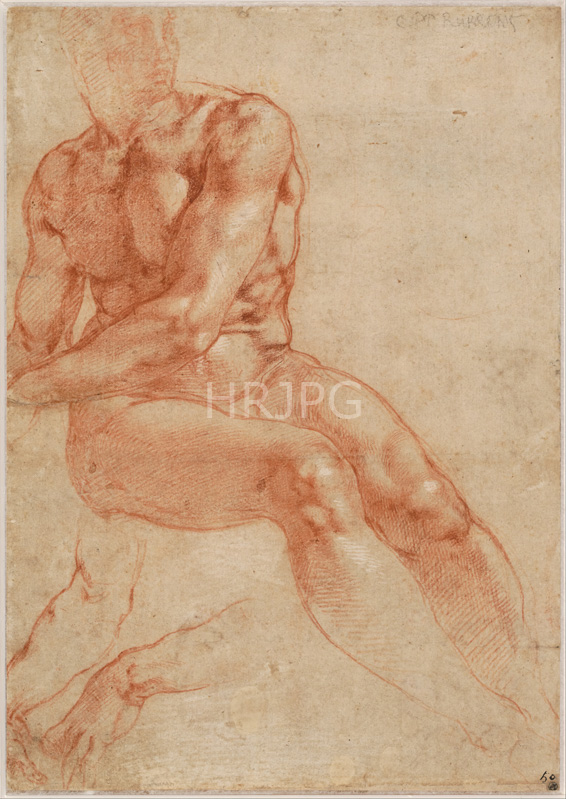
This masterful red chalk drawing is a preparatory anatomical study for one of the "Ignudi" (decorative nude youths) on the Sistine Chapel ceiling. Michelangelo utilize a live male model to conduct a rigorous investigation into human physiology, focusing on the muscular tension and skeletal structure of a seated figure in a complex, twisting pose. The drawing is a masterclass in the representation of physical volume and three-dimensional depth, featuring delicate hatching and rubbing to create a sense of lifelike skin texture. Every muscle ripple and bone alignment is rendered with microscopic precision, reflecting the artist’s belief that a profound understanding of anatomy was the only path to capturing spiritual truth through the human form.
The study showcases the transition from scientific observation to peak aesthetic idealism. Michelangelo focuses on the structural logic of the torso and limbs, using the "figura serpentinata" to create a sense of rhythmic harmony and potential energy. The use of red chalk allows for soft transitions between light and shadow, imbuing the figure with a luminous, living quality. This technical refinement reflects the artists commitment to the search for perfection, where even a decorative element of a larger project was subjected to an intense intellectual and physical scrutiny. By isolating the figure, scholars gain insight into how Michelangelo transformed his studies of nature into the monumental and heroic figure style that would revolutionize Western art history.
Historically, these "Ignudi" studies were highly influential, setting a new standard for the representation of the male nude in the Renaissance. They reflect the intellectual climate of Florence and Rome, where the human body was seen as the most perfect creation of the divine. Technically, the drawing serves as a bridge between the linear precision of Michelangelo’s early career and the monumental depth of his later frescoes. Now held in prestigious collections such as the British Museum or the Teylers Museum, this study remains a vital object for understanding the creative process of a genius who never relied on formulas, but sought a direct and uncompromising engagement with the "imitation of nature." It stands as a testament to the enduring power of the drawing to capture the deepest mysteries of human existence.