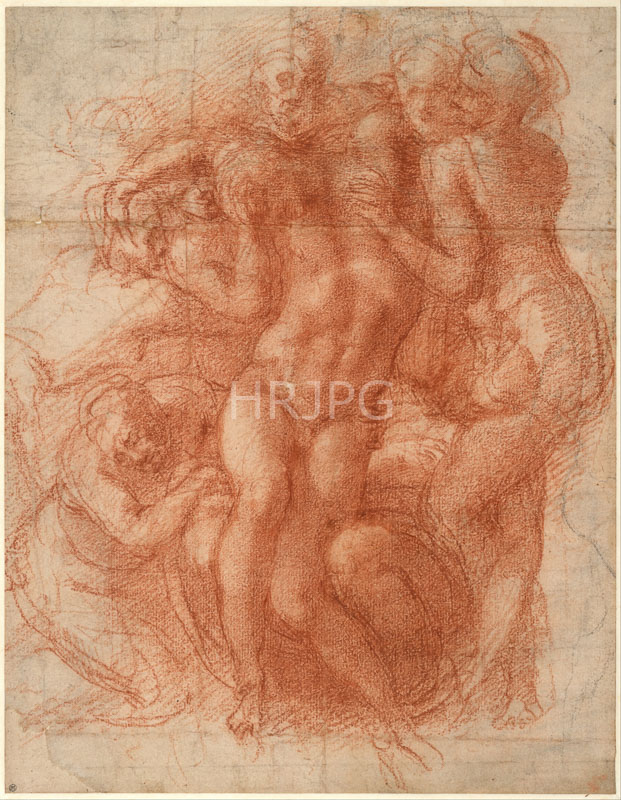
This red chalk sketch is a profound exploration of a complex group composition for a Pieta or Lamentation scene, illustrating Michelangelo’s evolving late style. The drawing focuses on the rhythmic arrangement of the Virgin Mary and other mourning figures as they support and grieve over the limp body of Christ. Characterized by elongated figure types and expressive, overlapping forms, the work departs from the stable, pyramidal compositions of his earlier career toward a more turbulent and emotionally raw visual language. Michelangelo utilizes vigorous hatching and rhythmic outlines to define the muscular tension and the psychological weight of grief, creating a sense of visceral energy that reflects his own late-life religious contemplations.
The technical execution of the sketch highlights the artist’s creative process and his focus on structural integrity. He explores various spatial arrangements for the limbs and torsos, searching for the perfect anatomical expression of sorrow and sacrifice. The "figura serpentinata"—the twisting and turning of the bodies—unifies the group into a singular, emotional vortex. The use of red chalk allows for a range of tonal values, from delicate, ghostly outlines to intense, dark markings that emphasize the physical weight of the dead Christ. This focus on the "motions of the mind" through contorted anatomy was a hallmark of the Mannerist era that Michelangelo helped to inspire. The "non-finito" state of the drawing adds to its evocative power, inviting the viewer into the artists restless and visionary creative struggle.
Historically, this study is significant for its demonstration of how Michelangelo continued to reinvent traditional religious themes throughout his long career. It reflects the spiritual intensity of 1530s Rome and the artists deep engagement with the themes of mortality and divine grace. Technically, the sketch serves as a masterclass in compositional grouping and the representation of extreme emotional states through the medium of the human form. Now held in prestigious collections such as the British Museum or the Ashmolean Museum, this work remains a vital object for understanding the foundations of the masters late figure style. It stands as a testament to Michelangelo’s relentless search for spiritual truth and his unique ability to capture the profound complexities of human grief and sacred history within a singular, crystalline visual space.