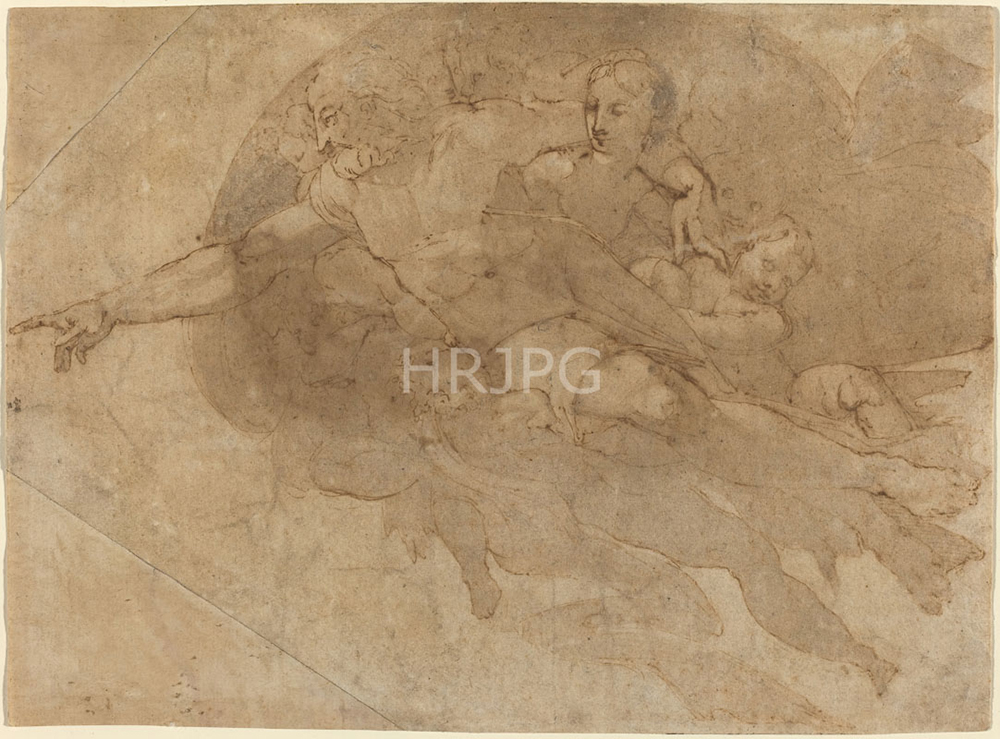
This ink and wash drawing by the Florentine artist Andrea Boscoli is a stylistic and visionary study of Michelangelo’s iconic figure of God the Father from the Sistine Chapel ceiling. Created in the late 16th century, the work showcases the Mannerist artists’ fascination with the heroic forms of the High Renaissance, translated into a more fluid, graphic, and emotionally expressive style. Boscoli captures the dynamic pose of the Creator, but he infuses the scene with a nervous energy and a decorative flair characteristic of the late Florentine tradition. This study serves as a fascinating document of how Michelangelo’s groundbreaking designs were interpreted and transformed by later generations of artists across the cities of Europe.
The technical execution involves a sophisticated use of pen outlines and brown washes to create a sense of movement and volume. Boscoli emphasizes the swirling drapery and the rhythmic gestures of the divine figure, prioritizing graphic impact over the stone-like solidity of the original fresco. The use of white highlights creates a flickering, ethereal light that enhances the celestial atmosphere of the glory. This focus on the "maniera" (style) and the inventive transformation of a classical model reflects the Mannerist interest in virtuosity and the "motions of the mind." The figures surrounding God are rendered with a lighter touch, providing a sense of scale and divine hierarchy while allowing the central figure to dominate the spatial arrangement with its explosive, rhythmic motion.
Historically, Boscoli’s study reflects the enduring legacy of the "Divine Michelangelo" as the ultimate model for artistic education. It highlights the importance of the Sistine Chapel as the "school of the world," where artists traveled to copy and internalize the master’s anatomical and compositional innovations. Technically, the drawing demonstrates the versatility of the ink and wash medium to capture the grand scale of a monumental fresco in a more personal and spontaneous format. Now held in world-class collections such as the Metropolitan Museum or the Louvre, this work remains a vital piece of the Renaissance reception history, proving that Michelangelo’s vision of the divine continued to challenge and inspire the creative spirit of the Mannerist and Baroque eras, securing its place as an iconic image of artistic transformation.