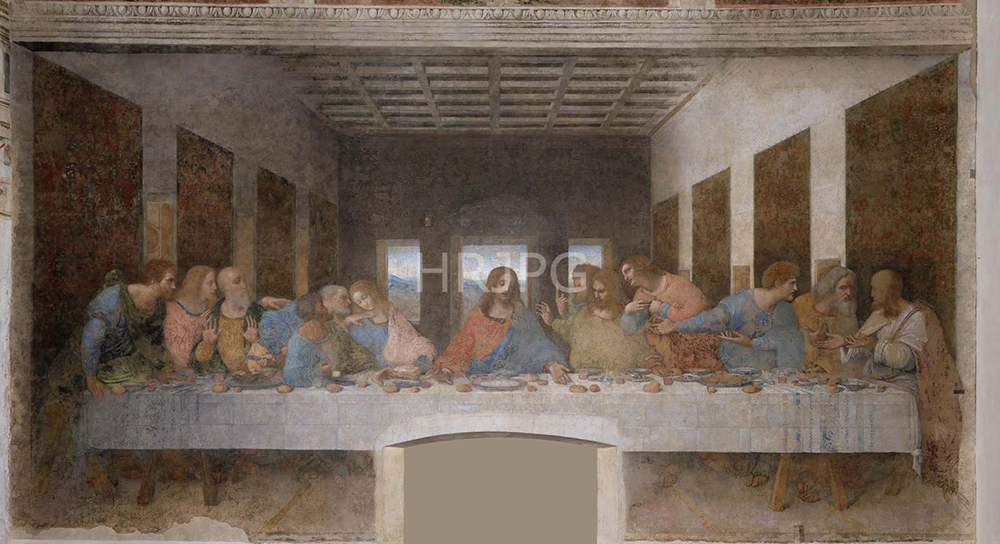
The composition is a masterclass in linear perspective with all receding lines converging at the head of Christ who forms a stable triangular shape in the center of the chaotic scene. Each apostle is depicted with a unique psychological reaction ranging from shock and anger to disbelief and grief. On the left side Bartholomew, James the Less, and Andrew are grouped together in a state of surprise. Next to them are Judas Iscariot who recoils into the shadow while clutching a bag of silver, along with Peter who holds a knife and a youthful John who appears overwhelmed by sorrow.
In the center of the composition Jesus is rendered in a stable triangular form radiating calm amidst the surrounding turmoil. His hands are placed on the table in a gesture that signifies both acceptance of his fate and the institution of the Eucharist. To the right of Jesus, Thomas, James the Greater, and Philip display their anguish and confusion through vivid hand gestures and facial expressions. On the far right Matthew, Jude Thaddeus, and Simon the Zealot engage in a heated discussion about the startling revelation.
Leonardo used sfumato to create soft transitions between light and shadow giving the figures a realistic physical presence and depth. The three windows in the background provide a natural light source and symbolize the Holy Trinity. Despite the extensive damage and numerous restoration attempts, the emotional power and intellectual complexity of the work continue to inspire viewers and scholars around the world. The detailed rendering of the table setting, including the bread and wine, highlights Leonardo's attention to still life elements within a grand narrative.
This masterpiece revolutionized the High Renaissance by prioritizing human emotion and complex spatial organization over static religious icons. The choice of the specific moment of betrayal creates a narrative tension that was unprecedented in religious painting at the time. Through careful study of human anatomy and gesture, Leonardo ensured that every limb and expression served the overall story. The mural has survived wars, neglect, and environmental factors standing as a testament to the enduring genius of its creator.
Even in its fragile state it communicates a profound sense of divinity and human drama that transcends the specific biblical event it depicts. This work remains a cornerstone of artistic study demonstrating how mathematical precision can coexist with profound emotional truth in a singular visual space. Every detail from the tapestry patterns on the walls to the reflections on the glassware was intended to immerse the viewer in the historical moment of the Passover meal. Leonardo managed to depict not just a meal but the entire spectrum of human experience in the face of divine sacrifice and human treachery.