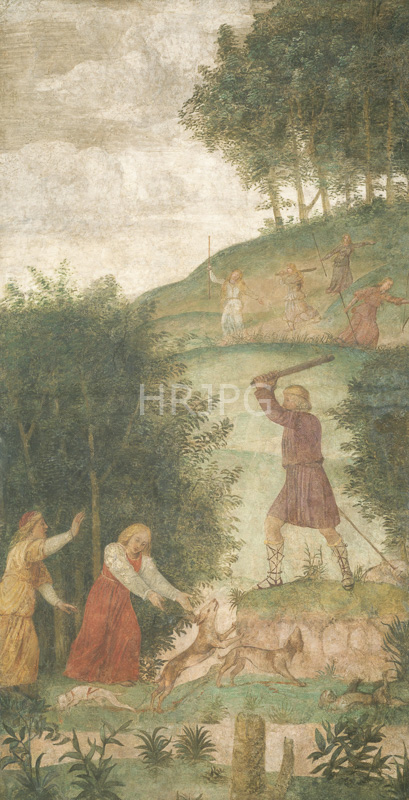
Luini’s handling of the human form here demonstrates his evolution from a purely mimetic follower of Leonardo to an artist with his own sense of rhythmic movement. The figures are characterized by their elongated limbs and elegant, almost balletic gestures, which reflect the emerging Mannerist trends of the 1520s while remaining grounded in the naturalism of the Lombard school. The interplay of light and shadow is particularly effective in this panel; light filters through the trees, highlighting the textures of the hunters' garments and the muscularity of the figures, creating a sense of tension and drama that permeates the scene.
The forest itself is a marvel of Renaissance botanical observation. Luini populates the landscape with various species of trees and shrubs, each rendered with a distinct character that contributes to the "wild" and unpredictable atmosphere of the hunt. This attention to detail serves not just a decorative purpose but a narrative one, emphasizing the isolation of the figures within a world that they cannot fully control. The contrast between the vibrant foreground and the hazy, atmospheric distance creates a powerful sense of space, inviting the viewer to step into the mythological realm.
As a component of the Villa Pelucca cycle, "Cephalus Punished at the Hunt" provides an important rhythmic shift in the overall decorative program. It moves the viewer from the domestic and psychological realms of the earlier scenes into a space of action and consequence. Luini’s ability to maintain a consistent aesthetic of grace and beauty, even when depicting conflict or punishment, was a key reason for his immense popularity among the Milanese elite. This fresco remains a crucial example of how Renaissance artists used classical myths to reflect the complexities of human nature and the societal expectations of their time, all while delivering a visually stunning and harmoniously organized masterpiece of mural art.