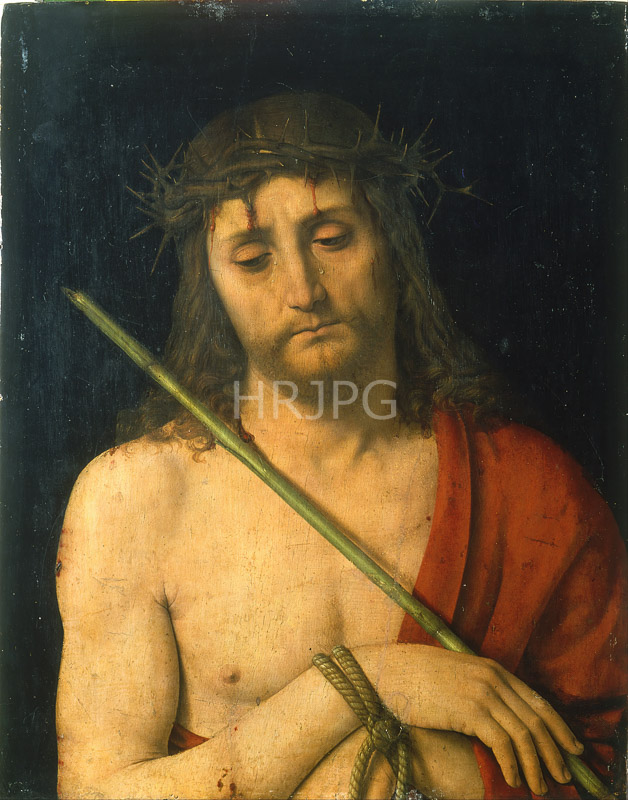
Andrea Solario’s "Ecce Homo" (Behold the Man) is a masterpiece of emotional intensity and technical refinement, reflecting the artist’s unique position as a bridge between the Milanese and Northern European painting traditions. Solario, who was deeply influenced by Leonardo da Vinci’s focus on psychological depth and "sfumato," was also significantly impacted by the meticulous realism of Flemish masters such as Quentin Matsys and Hans Memling. This work depicts Christ at the moment he is presented to the crowd by Pontius Pilate, crowned with thorns and bound by a thick, coarse rope. The composition is a tightly cropped half-length portrait, a format designed to create an immediate, confrontational intimacy between the suffering savior and the devout viewer.
The physical presence of Christ is rendered with startling clarity. Solario uses a sharp, focused light that highlights every painful detail: the individual thorns piercing the brow, the glistening drops of blood, and the raw texture of the rope that bites into the skin of the bound hands. Christ’s expression is one of profound, resigned sorrow, his downcast eyes and slightly parted lips conveying a state of internal agony that is both human and divine. The use of "sfumato" around the eyes and hair provides a soft, atmospheric quality that prevents the work from feeling purely clinical, imbuing it instead with a sense of spiritual mystery. The dark, monochromatic background serves to project the figure forward, making the physical suffering and moral dignity of Christ the sole focus of the viewer’s meditation.
Solario’s technical execution is particularly evident in the rendering of the flesh tones and the varied textures of the materials. The skin has a translucent, lifelike quality, while the wooden reed—given to Christ as a mock scepter—and the metallic glint of the crown of thorns show the artist’s mastery of still-life elements. This painting belongs to a series of "Man of Sorrows" images that were highly sought after for private devotion during the early 16th century. It reflects a shift in Renaissance religious art toward a more personal, empathetic experience of the Passion. As a key figure in the Milanese school, Solario exported these Leonardesque innovations to France and beyond, and this "Ecce Homo" remains one of his most powerful contributions to the development of sacred portraiture, blending intellectual rigor with a raw, visceral emotionalism.